Views: 0 Author: Site Editor Publish Time: 2026-08-19 Origin: Site
End papering forms the absolute structural foundation of hardcover bookbinding. You cannot ignore this critical tipping phase. Manual inconsistencies during this stage inevitably lead to downstream binding failures. Commercial binderies and print-on-demand facilities now recognize this urgent operational issue. They are rapidly shifting away from manual and semi-auto pasting methods. Operators prefer fully automated setups instead. This operational shift dramatically improves book block integrity. It also accelerates overall production speeds.
However, selecting the right equipment requires careful analysis. We must evaluate machinery based on strict performance criteria. An industrial end papering setup must eliminate staging bottlenecks entirely. It should secure the text block perfectly every single time. It must accomplish this without sacrificing overall product quality. You need practical insights to upgrade your setup effectively. We will explore the exact capabilities required for reliable hardcover production below.
Misaligned end sheets severely compromise the book block hinge. The hinge physically connects the text block to the hard cover. If end sheets sit incorrectly, the entire structure weakens. Crooked tipping creates uneven tension across the spine. This uneven tension causes the book to open poorly. It also leads to premature tearing along the joint. Readers notice these structural defects immediately.
Poor end papering creates a massive cascading effect downstream. It directly impacts casing-in accuracy. Misaligned blocks enter the casing-in phase unevenly. This error leads to skewed cases and unacceptable overhangs. Joint adhesion fails when the paper rests at an angle. Facilities subsequently face exceptionally high rejection rates.
Manual tipping hides massive operational costs. We often underestimate these invisible financial drains.
Automated alternatives eliminate these hidden operational costs entirely. They replace unpredictable human variables with consistent mechanical precision.
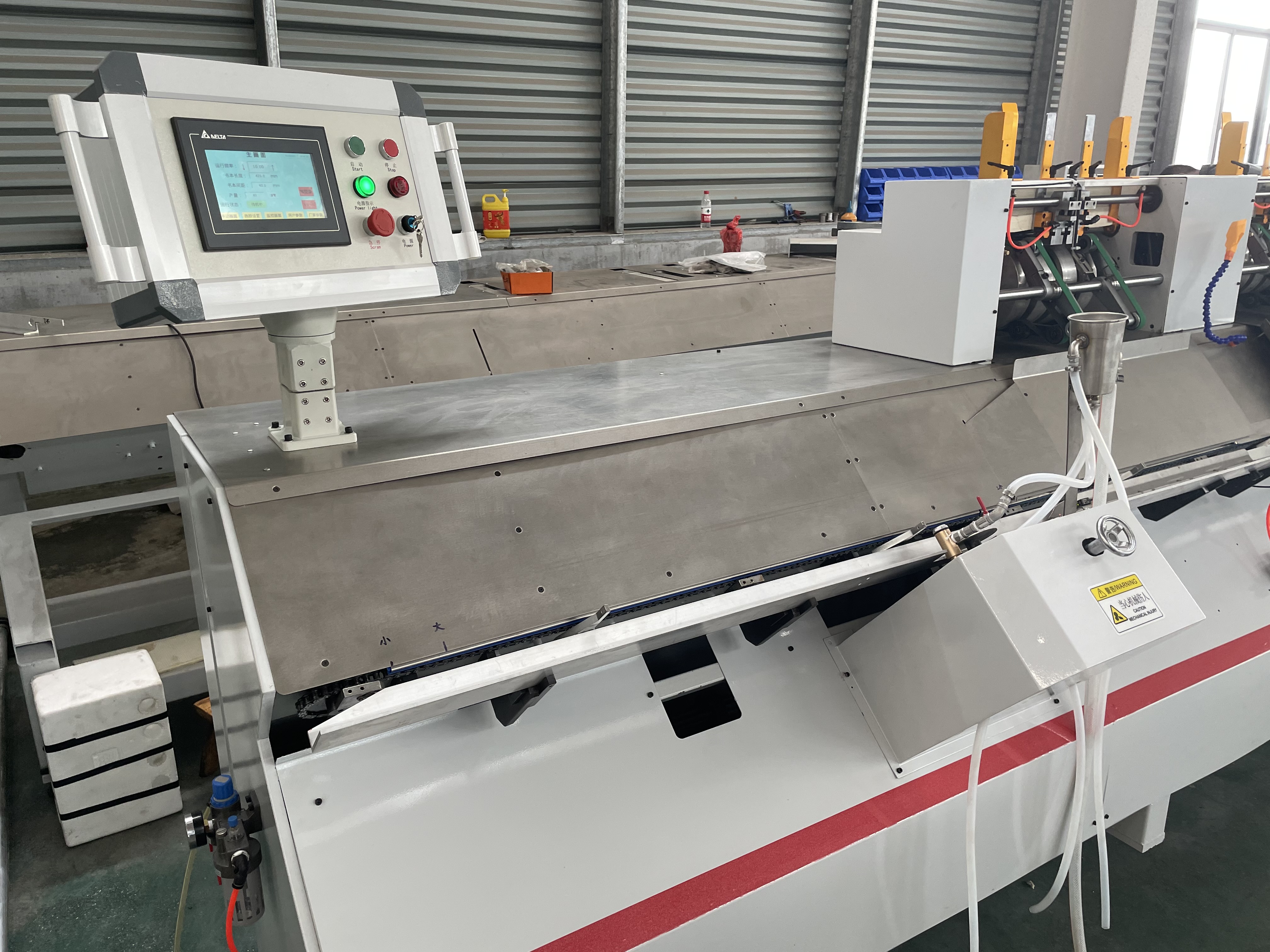
Adhesive application dictates the success of your tipping process. Traditional machines use roller-based pasting systems. Rollers can sometimes leave uneven glue lines. They might deposit excess adhesive near the edges. Precision extrusion nozzles offer significantly better control. Nozzles apply a perfectly measured strip of glue. Consistency in this glue line prevents paper wrinkling. It also prevents weak joints from forming. An automated End Papering Machine ensures optimal adhesive distribution.
Format flexibility remains vital for modern binderies. Short-to-medium runs demand rapid format changes. You might switch from A5 novels to oversized art books daily. Toolless adjustments are absolutely essential here. Operators should not need wrenches to change paper sizes. Advanced memory settings save exact calibration data. They recall specific dimensions instantly via a touchscreen interface.
Paper handling mechanisms vary across different machine models. You must evaluate bottom-suction versus friction feeders carefully. Facilities process various end sheet stocks regularly. You will encounter coated, textured, and heavyweight papers. Friction feeders can sometimes mark delicate or coated sheets. They struggle with highly textured materials. Bottom-suction feeders handle diverse stocks much better. They lift the paper cleanly without causing misfeeds.
Best Practices for Paper Handling:
Binderies must choose between inline and offline setups. You must analyze when to decouple end papering from casing-in. Offline setups work best when adhesives require long curing times. They also suit facilities managing multiple incompatible book formats simultaneously. Inline setups run a fully synced, continuous production line. They move the block instantly from tipping to casing. Inline configurations maximize throughput and reduce staging space.
Speed synchronization determines the success of inline systems. You cannot run machines at conflicting speeds. The end papering throughput must match the upstream gatherer. It must also perfectly match the downstream Hardcover Book Casing In Machine. If the casing machine runs faster, it starves for blocks. If it runs slower, book blocks pile up dangerously on the conveyor.
Quality control checkpoints prevent disastrous manufacturing errors. You must install sensors throughout the tipping sequence. Photoelectric sensors should detect missing end sheets instantly. Ultrasonic sensors can measure block thickness to spot doubles. These sensors catch misaligned blocks immediately. They halt the line before defective blocks enter the casing-in phase. Catching errors early saves expensive cover materials.
We must clarify the distinction between various bindery stages. End papering focuses purely on book block preparation. It secures the internal structure. Cover creation operates completely independently. You build the exterior shell using an Automatic Hardcover Case Maker. These two processes meet later during casing-in.
Mismatched equipment speeds create severe operational bottlenecks. An ultra-fast case maker becomes entirely inefficient if tipping lags. The case maker will sit idle awaiting prepared blocks. Conversely, a slow case maker creates a massive staging backlog. You will run out of floor space to store unfinished blocks. Balanced speeds guarantee smooth manufacturing flows.
Evaluating vendor ecosystems is a crucial strategic step. Buying all machinery from a single manufacturer ensures software compatibility. It guarantees physical conveyors line up perfectly. However, integrating specialized units from different brands offers unique advantages. You can select the absolute best machine for each specific task. Comprehensive Hard Cover Book Solutions require seamless mechanical integration regardless of brand.
Vendor Ecosystem Comparison Chart
| Strategy | Primary Advantage | Potential Drawback | Ideal Scenario |
|---|---|---|---|
| Single Manufacturer | Guaranteed software compatibility and synced speeds. | May lack specialized features for niche formats. | Fully automated inline production lines. |
| Mixed Brands | Access to the best-in-class technology per stage. | Requires custom conveyor bridges and IT setup. | Offline setups processing varied short runs. |
Adhesive management presents daily operational challenges. Glue selection dictates your cleaning protocols. Cold glue requires thorough daily washing of all application nozzles. Hot melt systems demand strict temperature control. If EVA glue drops below 160°C, it thickens rapidly. This viscosity change ruins the application line. Operators must also prevent glue build-up on optical sensors. Dirty sensors trigger false alarms and stop production.
Operator training curves require realistic expectations. Automated machinery looks simple on the surface. However, mastering format changeovers takes significant time. Machine calibration requires a deep understanding of paper behavior. Operators need weeks to recognize subtle feeding issues. Do not expect maximum throughput during the first month. Schedule extensive hands-on training for your lead technicians.
Footprint and facility requirements demand careful prior planning. Industrial binders consume significant three-phase electrical power. You must verify your facility meets these heavy voltage requirements. Many machines also require dedicated compressed air lines for pneumatic cylinders. Map out your floor space carefully. You must optimize material flow to minimize forklift traffic. Ensure operators have clear access to all machine doors.
Common Mistakes During Setup:
You must establish clear success metrics before purchasing equipment. Vague goals lead to poor purchasing decisions. Define specific Key Performance Indicators (KPIs) for the new setup. Target a specific percentage reduction in daily spoilage. Calculate your required pieces per hour to meet seasonal demand. Measure your current setup times and demand a 50% reduction. These hard metrics simplify your final decision.
Demand rigorous equipment demonstrations from your shortlisted vendors. Do not let vendors use their own perfect paper stock. You must test the equipment using your own worst-case-scenario materials. Bring highly curled paper to the demonstration. Supply book blocks with varying thicknesses and dense coatings. If the machine handles your most difficult materials, it will handle daily production easily.
A rigorous evaluation prevents costly operational surprises. Focus entirely on how the machine performs under actual manufacturing stress.
Precision in end papering remains absolutely non-negotiable for commercial binderies. You cannot produce durable, professional hardcover books with compromised hinges. Automated tipping eliminates the unpredictable errors associated with manual labor. It provides the exact consistency required for flawless casing-in.
Base your purchasing decision on verifiable mechanical reliability. Prioritize integration potential with your existing bindery equipment. Always match the machine's capabilities to your specific run-length profile. Short runs demand toolless changeovers, while long runs demand uninterrupted feeding.
Audit your current book block rejection rates today. Track exactly where your casing-in failures originate. If misaligned end sheets cause your spoilage, an automated upgrade is justified. Take action by requesting material tests from top equipment manufacturers.
A: Production speeds vary significantly based on the specific model and format size. Typical automated machines run between 30 to 60+ blocks per minute. Inline systems generally dictate the pace, matching the speed of upstream gatherers.
A: Some advanced dual-system machines do exist on the market. However, most facilities optimize for just one adhesive type. This choice depends entirely on specific paper stocks, desired open times, and required drying speeds.
A: Automation drastically improves short-run efficiency. Modern machines utilize servo-motors and memory-based touchscreen setups. These features make format changeovers incredibly fast. They make automated tipping viable for runs as low as 1 to 50 books.
A: This depends on the exact machinery configuration. Basic models only tip pre-folded sheets onto the block. More advanced systems include an inline folding station. They fold flat sheets just before applying the adhesive line.