Views: 0 Author: Site Editor Publish Time: 2026-08-07 Origin: Site
In exercise book production, changeover time refers to the time required to switch from one job specification to another. A factory may need to change book size, page count, ruling pattern, paper roll width, paper thickness, cover design, stitching position, folding setup or trimming size. Every change can create downtime if the production system depends on many separate machines and manual adjustments.
An Automatic Exercise Book Making Machine can reduce changeover time by connecting multiple production steps into one synchronized workflow. Instead of transferring semi-finished paper stacks between separate machines, an automatic exercise book making line can integrate ruling, sheeting, counting, cover feeding, wire stitching, folding, spine squaring, trimming and book collection.
For factories that handle repeated notebook orders, school exercise books, customized stationery products or multiple book formats, shorter changeover time can directly improve production efficiency. It helps operators move from one job to the next with less waiting, less manual handling and fewer setup errors.
For factories that need faster job changes and higher output, Koten’s Automatic Exercise Book Making Machine can help connect key production processes into one more efficient workflow.
This article explains where changeover time happens in exercise book production and how automatic exercise book lines help reduce it.
Automatic exercise book lines reduce changeover time by integrating multiple production processes, reducing manual transfer, improving setup coordination and helping operators control job changes more efficiently.
Key points include:
Changeover time increases when factories frequently switch book sizes, page counts, ruling patterns or cover designs.
Separate machines require more manual transfer, machine-by-machine setup and production coordination.
An automatic exercise book making line connects several steps into one workflow.
Synchronized control helps reduce repeated adjustments across different machines.
Automatic counting reduces page count errors and manual counting work.
Cover feeding helps reduce manual cover placement during job changes.
Linked stitching, folding, spine squaring and trimming improve format consistency after setup.
A clear pre-changeover checklist helps reduce trial-run waste and setup mistakes.
Automatic production is especially useful for high-volume factories with repeated specifications.
In short, an Automatic Exercise Book Making Machine reduces changeover time by making the production workflow more connected, more controlled and less dependent on manual transfer between separate machines.
Changeover time is the period between finishing one production job and starting stable production for the next job. In exercise book manufacturing, this may involve many adjustments because different orders often have different specifications.
A job change may require operators to adjust:
Paper roll width
Paper GSM
Ruling pattern
Ink color
Sheet length
Book size
Page count
Cover size
Cover feeding position
Stitching position
Folding alignment
Spine squaring
Trimming size
Book collection method
The actual changeover is not only the time spent adjusting one machine. It also includes waiting, moving materials, checking trial books, correcting errors and restarting production.
For factories producing many small or medium orders, changeover time can become a major source of lost capacity.
Exercise book factories often need to produce different products for schools, stationery brands, wholesalers, distributors and custom orders. Even if the products look similar, the production parameters may be different.
For example, one order may require a small-size exercise book with fewer pages and blue ruling. The next order may require a larger notebook with a thicker paper roll, different line spacing, a new cover design and a different trimming size.
Long changeover time can cause several problems:
More machine downtime
Lower daily output
More operator workload
More material waste during trial runs
Higher risk of setup errors
Slower delivery for mixed orders
More pressure on production planning
Lower flexibility for customized orders
Reducing changeover time helps factories respond faster to different order requirements. It also supports better production scheduling when several notebook specifications must be produced in the same week or even the same day.
Changeover time can occur at several points in the exercise book production process. Understanding these points helps manufacturers evaluate where automation can bring value.
When the factory changes paper grade, paper width or paper thickness, operators may need to adjust the unwinding, feeding tension and downstream settings. If this is not controlled well, paper feeding may become unstable.
Exercise books often require different ruling styles. A job change may involve line spacing, margin lines, ink color or printing position. Flexo ruling setup can affect both appearance and production speed.
Different book sizes require different cutting or sheeting lengths. If the sheeting section is not adjusted accurately, the final book size and downstream folding or trimming may be affected.
Page count is one of the most important specifications. Manual counting or unstable counting can slow production and increase the risk of incorrect book thickness.
Cover size, cover stack condition and feeding direction may change between orders. If cover feeding is manual, the changeover may take more time and require more operator attention.
Binding quality depends on accurate stitching, folding and spine treatment. When book thickness or size changes, these sections may need adjustment to keep the finished book stable and neat.
The trimming section must match the final book size. If trimming margins are incorrect, the finished book may have uneven edges or size inconsistency.
| Changeover Area | Typical Adjustment |
|---|---|
| Paper roll | Paper width, paper grade, paper thickness |
| Ruling section | Line pattern, ink color, ruling position |
| Sheeting section | Sheet length and cutting position |
| Counting section | Page count or book thickness |
| Cover feeding | Cover size, cover stack, feeding position |
| Stitching unit | Stitching position and wire setup |
| Folding unit | Fold position and spine alignment |
| Spine squaring | Spine flatness and book thickness setting |
| Trimming unit | Final book size and trimming margin |
| Collection | Stacking, counting and finished book delivery |
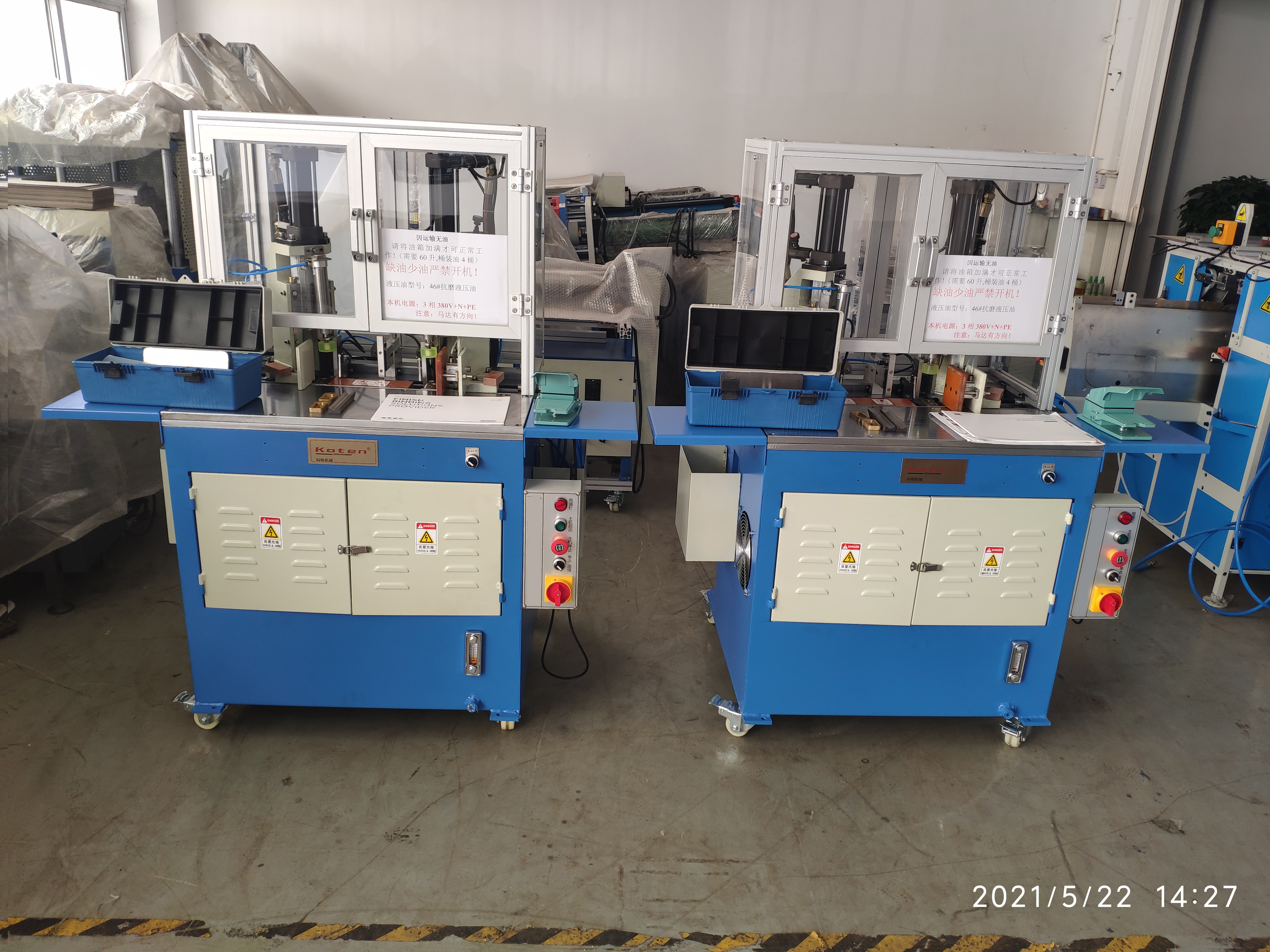
A key advantage of an automatic exercise book production line is integration. When multiple processes are connected, the factory can reduce manual transfer between machines.
In a separated production setup, operators may need to move paper stacks from printing to cutting, then to counting, then to stitching, folding and trimming. Each transfer may create waiting time, handling errors and alignment problems.
An automatic line reduces this by keeping the material flow connected.
Changeover is faster when different sections of the line can be adjusted in a coordinated way. Instead of setting up each machine separately, operators can control linked sections according to the new job specification.
This helps reduce repeated adjustments and makes trial production more efficient.
Book size changes are common in exercise book production. An automatic exercise book making line can help operators adjust relevant sections more systematically, including sheeting, folding, stitching and trimming.
This does not mean no adjustment is needed. It means the adjustment process can be more organized and less dependent on separate machine coordination.
Manual transfer adds hidden changeover time. Operators must move semi-finished materials, wait for the next machine to become ready, align stacks and restart production.
An integrated line can reduce this manual transfer. This helps manufacturers reduce downtime and improve workflow continuity.
Automatic counting and cover feeding can reduce two common manual bottlenecks. Page count changes can be handled more consistently, while cover feeding helps reduce manual placement work.
This is important when producing different exercise book specifications with different page counts and cover formats.
When stitching, folding, spine squaring and trimming are connected, the finished book format can become more consistent after setup. Operators spend less time correcting problems caused by poor hand transfer or misaligned semi-finished stacks.
Manual setup errors often appear during frequent job changes. These errors may include wrong page count, incorrect cover feeding direction, inaccurate trimming size or mismatched ruling pattern.
Automation cannot remove all operator responsibility, but it can reduce many repetitive manual steps and make the changeover process more controlled.
Roll Paper → Flexo Ruling → Sheeting → Counting → Cover Feeding → Wire Stitching → Folding → Spine Squaring → Trimming → Book Collection
This workflow shows why a connected line can reduce unnecessary transfer between production steps.
Job Specification → Parameter Setup → Roll / Cover Preparation → Synchronized Line Adjustment → Trial Run → Stable Production
This changeover flow shows that preparation and synchronized adjustment are critical. The more clearly the next job is defined, the faster the line can move into stable production.
| Automation Feature | Changeover Benefit |
|---|---|
| Integrated production line | Less manual transfer between separate machines |
| Synchronized control | Faster adjustment across linked sections |
| Automatic counting | Faster page count change and fewer manual errors |
| Cover feeder | Reduces manual cover placement time |
| Adjustable sheeting | Faster size or length adjustment |
| Linked stitching and folding | Better format consistency after setup |
| Spine squaring system | More stable book spine after format change |
| Book trimming system | Faster final size control |
| Centralized operation | Easier coordination for operators |
| Finished book collection | Reduces manual sorting and handling pressure |
Both automatic and semi-automatic exercise book solutions can be useful, depending on factory size, budget, product range and output target. However, their changeover behavior is different.
Semi-automatic solutions may be more flexible for smaller budgets or lower production volumes, but they usually require more manual transfer and machine-by-machine adjustment. Automatic lines are more suitable when the factory needs higher output, more stable production and shorter changeover between repeated specifications.
To compare automatic and semi-automatic production choices, Koten’s Exercise Book Making Solutions content explains how automatic lines and separate machines can serve different production needs.
| Factor | Automatic Exercise Book Making Line | Semi-Automatic Solution |
|---|---|---|
| Machine connection | Integrated line | Several separate machines |
| Manual transfer | Lower | Higher |
| Setup coordination | More centralized | More machine-by-machine adjustment |
| Operator workload | Lower for full-line control | Higher for feeding and transfer |
| Format consistency | Easier to maintain after setup | More dependent on manual handling |
| Changeover control | More systematic | More dependent on operator coordination |
| Best for | Large-volume and repeated jobs | Smaller runs or flexible budget projects |
A fast changeover depends on preparation. Before changing from one exercise book job to another, the factory should confirm all key specifications.
If the next job specification is incomplete, operators may stop the line to check size, page count, cover position or trimming margins. This creates unnecessary downtime.
| Item | What to Confirm |
|---|---|
| Book size | Final length and width |
| Page count | Sheets per book or book thickness |
| Paper roll | Width, GSM, grade and roll condition |
| Ruling pattern | Line style, color and spacing |
| Cover | Cover size, stack quality and feeding direction |
| Binding | Wire stitching position and spine requirement |
| Folding | Fold alignment and spine squaring |
| Trimming | Front, side and final trim size |
| Packaging / collection | Finished book stacking and delivery method |
| Output target | Speed, quality and production quantity |
| Changeover frequency | How often jobs change in daily production |
| Workshop layout | Material flow, operator position and space requirement |
For manufacturers handling multiple notebook specifications, Koten can help review paper roll width, ruling pattern, page count, cover feeding method, stitching position, trimming size and output target before recommending a line configuration.
When purchasing an Automatic Exercise Book Making Machine, factories should not only ask about maximum speed. Changeover efficiency is also important.
Buyers should evaluate:
Supported book size range
Supported paper roll width and GSM range
Ruling and printing flexibility
Page counting accuracy and adjustment
Cover feeding method
Stitching position adjustment
Folding and spine squaring control
Trimming adjustment
Operator interface
Production line synchronization
Required number of operators
Maintenance accessibility
Spare parts support
Space and workshop layout requirement
Compatibility with current production planning
A high-speed line may not create the expected value if job changes are slow or difficult. The best automatic line should match the factory’s real product range and changeover frequency.
Koten provides exercise book making equipment and production solutions for notebook and stationery manufacturers. For factories that want to reduce changeover time, the goal is not only to buy one machine, but to configure a production line that matches the factory’s book specifications, output target and workflow.
Koten’s Full Automatic Exercise Book Making Machine is designed to connect multiple steps in the exercise book production process, including roll paper feeding, flexo ruling, sheeting, counting, cover feeding, stitching, folding, spine flatting, trimming and book collection.
Koten can help users review:
Book size range
Page count range
Paper GSM and roll width
Ruling style
Cover type and size
Binding method
Required output
Changeover frequency
Operator arrangement
Workshop layout
Budget and automation level
By matching these factors early, factories can choose a more suitable automatic exercise book making line and reduce unnecessary production interruptions.
Automatic exercise book lines reduce changeover time by connecting multiple production steps, reducing manual transfer, improving setup coordination and helping operators move from one job specification to the next more efficiently.
In exercise book manufacturing, changeover time may come from paper roll changes, ruling pattern setup, sheeting length adjustment, page count changes, cover feeding, stitching, folding, spine squaring, trimming and book collection. If these steps are handled by separate machines, operators may spend more time moving materials, resetting equipment and correcting errors.
An Automatic Exercise Book Making Machine helps reduce this problem through integrated production, synchronized control, automatic counting, cover feeding, linked stitching and folding, trimming control and more centralized operation. It cannot remove every adjustment, but it can make job changeover more systematic and less dependent on manual transfer.
Need to reduce changeover time in your notebook factory? Contact Koten with your book size range, paper GSM, page count, ruling style, cover type, binding method, required output, changeover frequency and workshop layout to receive a customized automatic exercise book making machine recommendation.
Changeover time is the time required to switch from one exercise book job to another. It may involve changing paper roll, book size, page count, ruling pattern, cover feeding, stitching position, folding setup and trimming size.
It can reduce changeover time by integrating multiple processes into one production workflow, reducing manual transfer, improving synchronized setup and minimizing repeated machine-by-machine adjustments.
No. Job changes still require setup and confirmation. However, an automatic line can help shorten changeover time and reduce downtime compared with more manual or separated production systems.
Common steps include paper roll change, ruling setup, sheeting length adjustment, page count setup, cover feeding, stitching, folding, spine squaring and trimming.
Automatic counting helps operators adjust page count more consistently and reduces manual counting errors when changing from one book thickness to another.
Cover feeding affects how quickly the line can switch to a new cover size, cover stack or feeding direction. Automatic cover feeding reduces manual placement work and improves line continuity.
Yes. Semi-automatic solutions may be suitable for smaller production volumes, flexible budgets or less frequent job changes. Automatic lines are usually better for higher output and repeated specifications.
Factories should confirm book size, page count, paper roll, ruling pattern, cover size, binding method, folding requirement, trimming size, output target and collection method.
No. Buyers should also compare supported specifications, changeover convenience, synchronization, operator workload, counting accuracy, cover feeding, trimming adjustment and service support.
Yes. Koten can recommend a suitable exercise book making solution based on book size, paper roll, page count, ruling style, cover type, binding method, required output, changeover frequency and workshop layout.


