
Views: 0 Author: Site Editor Publish Time: 2025-11-24 Origin: Site
Selecting the right paper cutter is more than just a matter of convenience—it directly affects efficiency, safety, and the overall quality of your work. A well-chosen cutter can save time, reduce errors, and produce professional, clean edges, while the wrong tool may slow down productivity or even compromise safety.
Paper cutting needs vary greatly depending on the environment.
Home Use: Craft enthusiasts and students often require compact, easy-to-use trimmers for scrapbooking, card-making, or school projects.
Office Settings: Businesses rely on reliable paper cutters to prepare reports, documents, and presentations quickly and neatly.
Schools & Educational Institutions: Teachers and administrative staff often need user-friendly tools to handle frequent, moderate cutting tasks.
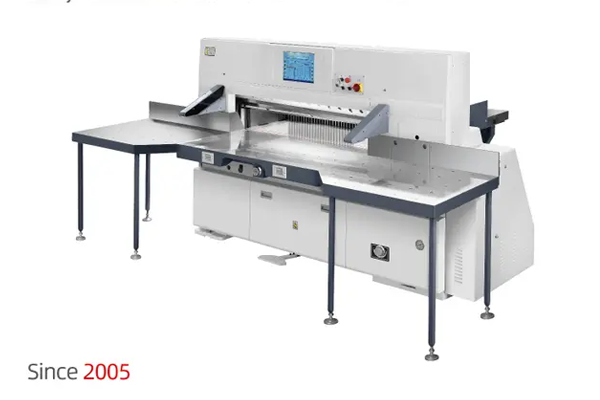
Commercial & Industrial Applications: Printing houses, packaging companies, and publishing firms depend on heavy-duty guillotine or rotary paper cutters to handle large volumes with speed and precision.
Because every user’s requirements differ, choosing the right cutter involves assessing factors such as cutting volume, material type, safety, and long-term cost. By understanding these considerations, you can confidently select the paper cutting machine that best aligns with your needs.
Before investing in a paper cutter, it is important to assess your specific needs. Asking the right questions will help you choose a model that balances efficiency, cost, and long-term value. Here are some essential factors to consider:
Occasional Use: If you only need a cutter for occasional school projects, light office work, or personal crafts, a compact paper trimmer may be sufficient. These models are affordable, easy to store, and safe for beginners.
Frequent Use: For businesses, schools, or print shops that cut paper on a daily basis, a guillotine or program-controlled cutter is a better choice. These machines are designed for durability and high-volume workloads.
Not all cutters are designed for the same materials.
Standard Paper & Cardstock: A trimmer or guillotine works well for regular sheets and light-duty cutting.
Laminated Sheets & Packaging Board: Heavy-duty guillotines or rotary cutters are ideal because they can handle thicker, tougher materials with precision.
Specialty Applications: If you work with magazines, books, or printed materials in bulk, consider an industrial paper cutting machine with adjustable settings.
Portability: Small trimmers are lightweight and easy to carry, making them perfect for teachers, mobile offices, or craft workshops.
Heavy-Duty Performance: If your work demands cutting hundreds of sheets or entire stacks at once, an industrial guillotine cutter or an automatic cutting line is more appropriate. These machines may require more space and investment, but they deliver professional-grade results.
By carefully answering these questions, buyers can narrow down the options and choose a paper cutter that matches their actual workflow. This ensures better productivity, reduced waste, and safer operation.
When selecting a paper cutter, understanding the cutting capacity and size is crucial. These factors directly affect productivity, efficiency, and suitability for specific projects.
Paper cutters are designed to handle different quantities of sheets at once, depending on the model:
Small Capacity (1–10 sheets): Ideal for light-duty tasks, such as home crafts, student projects, or office documents. Small trimmers fall into this category and are perfect for precision cutting of individual sheets.
Medium Capacity (20–50 sheets): Suitable for moderate workloads in schools, small offices, or printing tasks that require cutting multiple sheets simultaneously. Guillotine cutters often handle this range efficiently.
Large Capacity (100+ sheets): Designed for high-volume cutting in commercial printing, packaging, or industrial applications. Heavy-duty guillotine machines or automatic cutting lines can process thick stacks with consistent accuracy.
The maximum cutting length determines the size of paper formats that can be processed:
Standard Sizes: A4 and letter-sized paper are common for office and school use.
Medium Sizes: A3 and tabloid formats are typical in design studios or small print shops.
Oversized Formats: For large-scale printing, packaging boards, or custom projects, specialized cutters can handle extra-large sheets efficiently.
Online searches often focus on sheet capacity because it directly impacts workflow efficiency. Buyers want machines that match their typical cutting volume, reduce repeated cuts, and minimize time spent on repetitive tasks. Selecting a cutter with the appropriate capacity ensures both productivity and safety.
By carefully evaluating cutting capacity and sheet size, users can choose the most suitable paper cutter for their workflow, whether for small craft projects or large-scale industrial production.
When choosing a paper cutter, understanding the balance between precision and speed is essential. Different projects and environments demand different priorities, whether it’s delicate trimming or high-volume cutting.
For tasks requiring exact cuts, such as craft projects, photo trimming, or design layouts, precision is the top priority.
Paper Trimmers: Manual or semi-automatic trimmers provide straight, accurate cuts on single sheets or small stacks.
Features Supporting Accuracy: Clear measurement guides, rulers, adjustable clamps, and protective blades help achieve clean, precise edges.
Ideal Use Cases: Scrapbooking, greeting cards, photo albums, or detailed paper crafts where misalignment cannot be tolerated.
For high-volume cutting, such as in schools, offices, or printing shops, speed is more critical than extreme precision on individual sheets.
Guillotine Cutters: Handle medium to large stacks efficiently, providing consistent straight cuts for dozens of sheets simultaneously.
Rotary Cutters: Suited for industrial or continuous operations, capable of cutting hundreds of sheets quickly with minimal manual intervention.
Ideal Use Cases: Mass production of booklets, office documents, packaging materials, or commercial printing jobs.
Small-Scale, High-Precision Tasks: Trimmers are slower but more accurate, perfect for detailed work.
Large-Scale, Fast Cutting Tasks: Guillotines and rotary cutters prioritize speed and volume but may require careful setup to maintain alignment for precise cuts.
Decision Tip: Users should match the cutter type to their workflow needs—high precision for intricate tasks, and high speed for bulk production—ensuring efficiency without sacrificing quality.
By understanding the trade-offs between precision and speed, businesses and hobbyists can select a paper cutter that delivers optimal results for their specific projects, improving both workflow efficiency and output quality.
Choosing the right paper cutter is not only about cutting efficiency and precision—it’s also about operator safety. Ensuring that your paper cutting tool has the necessary safety features is critical, especially in schools, offices, and craft environments where multiple users may handle the equipment.
Function: Blade guards cover the cutting edge to prevent accidental contact during operation.
Benefit: Minimizes the risk of cuts and injuries, making the cutter safer for beginners and children.
Application: Essential for manual trimmers and guillotine cutters, particularly in classrooms or shared workspaces.
Function: Locks keep the blade in a secure position when the cutter is not in use.
Benefit: Prevents unintended blade movement or activation, reducing potential accidents.
Usage Tip: Always engage the safety lock when storing the cutter or moving it to a new location.
Function: Rubberized or textured bases keep the cutter stable during use.
Benefit: Reduces slippage, ensuring clean, straight cuts while protecting hands from accidental contact.
Importance: Particularly critical for high-volume guillotine or rotary cutters where force is applied during cutting.
Searches for terms like “safe paper cutter” and “child-safe trimmer” are common online.
Users expect paper cutters to combine efficiency, precision, and protection in one tool.
Investing in safety features improves confidence for operators and reduces workplace accidents.
By prioritizing blade guards, safety locks, and non-slip bases, businesses, schools, and hobbyists can ensure a safe and reliable cutting experience, making the paper cutter not just efficient but also user-friendly.
When choosing a paper cutter, durability and maintenance are key factors that determine long-term performance and cost-effectiveness. A reliable cutter not only delivers consistent results but also reduces downtime and replacement costs.
Steel Blades: High-quality steel blades are sharp, durable, and resistant to wear. They provide clean, precise cuts over long-term use.
Plastic Bases and Components: Lightweight plastic bases are common in small trimmers but may wear faster, warp, or become unstable over time.
Recommendation: For professional or high-volume use, opt for cutters with metal construction and reinforced bases to ensure stability and longevity.
Sharpening: Regular blade sharpening keeps cuts clean and reduces tearing, especially for guillotine and rotary cutters.
Replacement: Some cutters feature replaceable blades, making maintenance simple and extending the tool’s overall life.
Tip: Check manufacturer guidelines for recommended sharpening intervals or blade replacement schedules to maintain efficiency.
Light-Duty Cutters: Ideal for home, school, or craft use, these cutters typically handle low volumes and may last a few years with proper care.
Heavy-Duty Cutters: Designed for offices, printing shops, and industrial settings, these cutters are built for frequent use and can last many years when maintained properly.
Key Consideration: Investing in heavy-duty, high-quality cutters may have a higher upfront cost but offers long-term reliability and reduced maintenance issues.
Keep the cutter clean from paper dust and debris.
Lubricate moving parts if recommended by the manufacturer.
Regularly inspect safety features and blade alignment.
By paying attention to materials, blade care, and proper maintenance, users can ensure their paper cutter remains durable, safe, and efficient, providing consistent performance across years of use.
Selecting the most suitable paper cutter depends on your specific application, cutting volume, and precision requirements. Different cutters excel in different scenarios, and understanding these distinctions ensures efficiency, safety, and professional results.
Recommended Tool: Small paper trimmers.
Why: Ideal for low-volume cutting tasks such as scrapbooking, card-making, or preparing personal documents.
Key Benefits:
Compact and easy to store.
Safe for beginners, with protective blade mechanisms.
Low maintenance and budget-friendly.
Recommended Tool: Guillotine paper cutters.
Why: Efficient for medium to large stacks of paper, making them suitable for classrooms, administrative offices, or document preparation centers.
Key Benefits:
Fast and precise cutting for multiple sheets at once.
Durable construction for frequent use.
Provides consistent, straight cuts for professional documents.
Recommended Tool: Rotary or hydraulic cutters.
Why: Designed for high-volume, continuous cutting in printing houses, packaging companies, or industrial facilities.
Key Benefits:
High-speed operation with minimal downtime.
Handles large sheets, laminated materials, and specialty substrates.
Ensures long-term reliability for demanding production schedules.
When choosing a paper cutter, it is essential to match your needs with the right tool, considering factors such as cutting volume, precision, safety, and budget. Home users and crafters benefit from compact trimmers, offices and schools require reliable guillotines, while commercial and industrial environments demand robust rotary or hydraulic cutters.
For businesses or professionals seeking reliable, high-performance paper cutting solutions, exploring equipment from Koten Machinery ensures access to a wide range of cutters tailored to diverse production needs, providing efficiency, precision, and consistent results.


