Views: 0 Author: Site Editor Publish Time: 2025-08-22 Origin: Site
Die cutting technology is a cornerstone in manufacturing processes involving labels, packaging, laminates, and various other materials. Among the different types of die cutting machines, rotary die cutting and flatbed die cutting presses are two prominent categories, each offering unique advantages for specific applications. At Koten Machinery, we provide both rotary die cutting and flatbed die cutting solutions designed to optimize productivity and precision across industries. In this article, we will explore the fundamental differences between rotary and flatbed die cutting machines, their typical use cases, and guidance on selecting the right technology for your production needs.
Rotary die cutting is a high-speed process that utilizes cylindrical roller systems to continuously feed and cut materials. In this setup, a rotary die—a metal cylinder engraved with the cutting pattern—rotates in sync with an opposing roller, pressing the material as it moves through the machine. This continuous motion enables rapid, efficient cutting at speeds far surpassing traditional flatbed systems.
Industries heavily relying on rotary die cutting include label manufacturing, flexible packaging, and laminate production. For example, pressure-sensitive labels used in consumer goods packaging are commonly produced via rotary die cutting because it handles long rolls of material continuously, ensuring consistent precision and high throughput.
According to Wikipedia’s comparison of rotary versus flatbed die cutting, rotary systems are ideal for long-run jobs where speed and automation are critical. The cylindrical design allows for smooth material feeding, minimal downtime, and the capability to integrate inline processes like laminating or printing.
Rotary die cutting machines are often chosen by manufacturers aiming to maximize output without compromising quality, especially when working with thin, flexible substrates such as films, foils, and paper rolls.
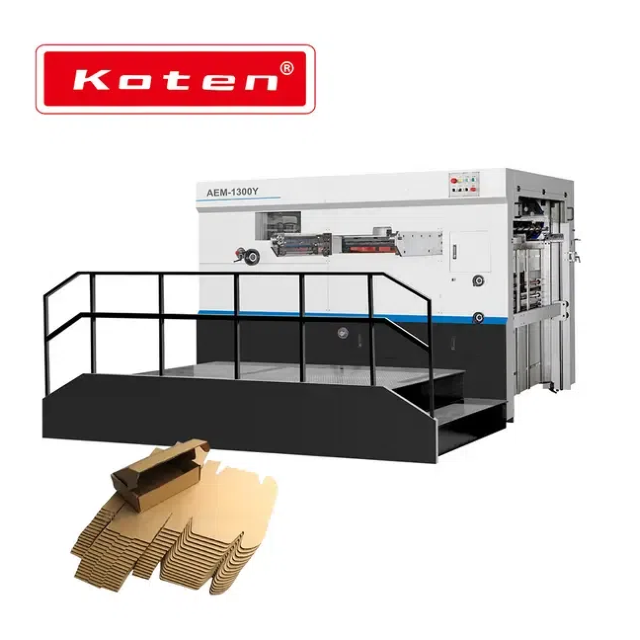
Flatbed die cutting machines function differently by employing a flat platen surface where dies and materials are laid out in a sheet-by-sheet format. The die applies pressure vertically to the material, cutting or embossing it in a precise and controlled manner. This approach allows for intricate cuts on thick or rigid substrates that are challenging for rotary systems.
Flatbed die cutting is widely regarded for its versatility. It is ideal for producing folding cartons, corrugated boxes, leather goods, foam products, and other thick materials. The ability to accommodate varying thicknesses and complex designs makes flatbed presses indispensable for packaging manufacturers, custom box producers, and specialty goods fabricators.
Resources like sblmachinery.com emphasize that flatbed die cutting machines are well-suited for small to medium production runs and prototyping because of their easier setup and adaptability. The sheet-by-sheet operation allows users to change dies and materials frequently without the need for long roll feeds, making flatbed presses especially attractive for short runs and bespoke products.
Understanding the distinctions between rotary and flatbed die cutting machines requires considering several operational and economic factors:
Production Volume: Rotary die cutting excels at high-volume, continuous production, while flatbed die cutting is optimized for smaller batch sizes and prototyping.
Speed: Rotary systems operate at much higher speeds due to their continuous feeding mechanism, reducing cycle times significantly.
Precision and Complexity: Flatbed die cutting machines typically offer finer precision on thicker or multi-layered materials, suitable for detailed cuts.
Setup and Changeover: Flatbed presses usually have shorter setup times and greater flexibility for frequent die changes compared to rotary systems.
Cost: Rotary die cutting presses involve higher initial investment and maintenance complexity but provide cost efficiency over long runs. Flatbed machines have lower upfront costs and simpler maintenance but are less efficient for mass production.
Material Compatibility: Rotary machines handle thin, flexible substrates effectively, whereas flatbed presses can process a wider range of materials including rigid and thick sheets.
Evaluating these parameters helps manufacturers select the system that best aligns with their production scale, material requirements, and budget.
Choosing between rotary and flatbed die cutting machines depends on your specific workflow and business goals.
Speed and Output: If your operation requires rapid production of high volumes — such as label runs or continuous packaging — rotary die cutting machines are preferable due to their unmatched throughput.
Batch Flexibility: For businesses producing multiple product variants or short runs with frequent design changes, flatbed die cutting machines offer better flexibility and lower downtime.
Material Considerations: When working with thicker, rigid, or layered materials like cardboard, leather, or foam, flatbed die cutters provide the necessary cutting force and precision.
Budget and Space: Flatbed presses typically demand less capital investment and are often more compact, making them suitable for small to mid-size operations.
Long-term Investment: Rotary machines require higher upfront capital but often yield better economies of scale for continuous production environments.
Understanding your production volume, material types, and financial constraints will guide you to the most suitable die cutting technology.
At Koten Machinery, we engineer both rotary and flatbed die cutting machines with a focus on durability, precision, and efficiency. Our rotary die cutting presses feature flexible tooling options, enabling quick die changes and reducing material waste. High uptime is ensured through robust construction and advanced control systems that minimize stoppages and maintenance needs.
Our flatbed die cutting machines offer superior accuracy and adaptability. They are designed to handle a broad spectrum of materials with ease, providing clean cuts on complex shapes and thick substrates. User-friendly interfaces and ergonomic designs facilitate faster setups and ease of operation, even for intricate jobs.
By offering both rotary and flatbed solutions, Koten Machinery empowers manufacturers to optimize their workflows according to their product requirements and market demands.
Many manufacturers integrate rotary and flatbed die cutting machines within a hybrid workflow to leverage the strengths of each system. Flatbed die cutting presses are often used during the prototyping phase or for short production runs that require frequent die changes or material variations. After finalizing designs and processes, rotary die cutting machines take over for full-scale production, delivering high-speed and consistent output.
This approach enables businesses to maintain agility during product development while scaling up efficiently when demand increases. Utilizing both types within one operation can optimize cost-efficiency and responsiveness.
Rotary die cutting and flatbed die cutting machines both play essential roles in modern manufacturing. Rotary presses are indispensable for high-speed, large-volume production of flexible materials, while flatbed presses offer versatility and precision for thick or complex materials in smaller runs.
At Koten Machinery, we provide a comprehensive selection of rotary die cutting and flatbed die cutting machines engineered to meet diverse production needs. Our expertise and quality manufacturing help clients achieve superior results with reliable equipment. To explore which die cutting system best fits your business or to schedule a demo, please contact us. Our team is ready to assist you in selecting the optimal solution that enhances your production efficiency and product quality.
For more information about our rotary die cutting and flatbed die cutting machines, contact Koten Machinery today. We are committed to delivering innovative printing and packaging machinery solutions tailored to your needs.


