Views: 0 Author: Site Editor Publish Time: 2026-03-09 Origin: Site
Launching a new exercise book production project rarely begins with a machine catalog. Most buyers start with a practical question: how can paper be turned into finished school notebooks efficiently and consistently? Understanding Exercise Book Making Solutions is the first step toward building a reliable production workflow. Instead of focusing on a single machine, this approach looks at the entire process—from raw paper preparation to the final trimmed book—so that production runs smoothly and can grow with demand. For companies planning to enter or expand in the stationery market, starting with a complete solution helps avoid fragmented equipment decisions and creates a stronger operational foundation.
A common misconception among new manufacturers is that exercise book production begins with purchasing a stitching machine or a single binding unit. In reality, producing high-quality exercise books involves several coordinated steps that must operate together smoothly. Each step—from paper preparation to final trimming—affects both production efficiency and product consistency.
A solution-based approach considers the entire workflow as one integrated process. Instead of assembling machines randomly, a complete system aligns every stage so that material flows naturally from one operation to the next.
Before selecting any equipment, it is essential to define the target product. Exercise books vary widely in size, page count, and cover style. School notebooks, student exercise books, and basic writing books may appear simple, but each specification changes production requirements.
Daily output expectations also play a major role. A small regional distributor may need tens of thousands of books per day, while large educational supply chains may require significantly higher volumes. By clarifying these production goals early, manufacturers can build a system that matches both current demand and future growth.
Workflow planning determines whether production will remain stable over time. Without careful planning, factories may experience bottlenecks between machines, excessive manual handling, or inconsistent quality control.
A properly designed exercise book production line ensures that every stage is synchronized. Paper feeds smoothly into printing or ruling, pages move efficiently through gathering and stitching, and finished books exit the line ready for packaging. When workflow planning is done correctly, the factory avoids unnecessary downtime and operates with predictable output.
Exercise books are widely used in schools across many regions, but specifications differ by country. Common formats include A4, A5, and smaller notebook sizes designed for classroom use. Page counts may range from 32 to over 200 pages depending on the educational system.
Understanding the primary market demand helps determine the configuration of the production line. For example, high-volume standard exercise books benefit from continuous automated production, while mixed product formats may require more flexible configurations.
Wire-stitched exercise books remain one of the most common notebook formats worldwide because they are economical and durable. In this process, folded paper sections are secured along the spine using metal wire stitches.
Compared with spiral or glue binding methods, wire stitching allows fast production speeds and consistent binding quality. For many school notebook manufacturers, wire-stitched exercise books provide the best balance between production efficiency and product reliability.
New factories often face challenges related to product variation. Producing too many different sizes or page counts at the beginning can complicate machine setup and increase adjustment time.
Starting with standardized products simplifies production. Once operators become familiar with machine settings and workflow timing, it becomes easier to expand into additional notebook formats. Standardization helps maintain stable output during the early stages of manufacturing.
Exercise books typically contain ruled pages that guide handwriting. This ruling can be applied during the printing stage using specialized equipment designed for consistent line spacing and alignment.
The ruling process prepares the interior paper before it enters the book assembly stage. Accurate ruling ensures that each page maintains uniform formatting, which is especially important for educational materials.
Once the interior sheets are prepared, they must be counted and gathered into precise sets. Each set corresponds to the final page count of the exercise book.
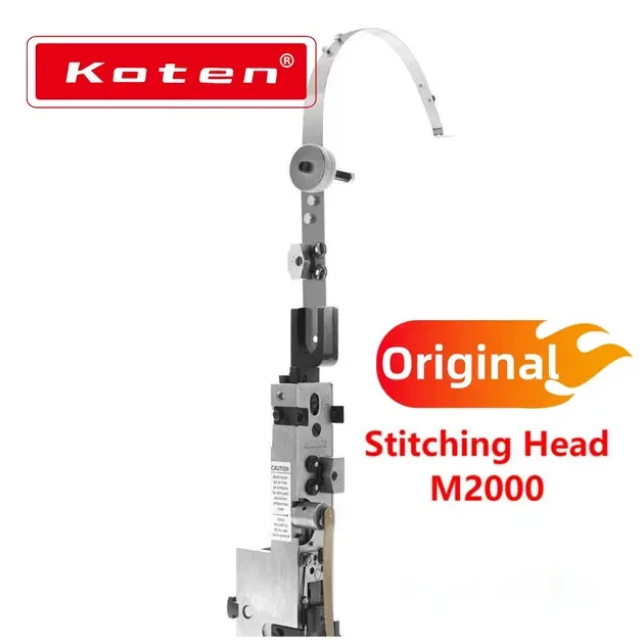
After gathering, the sheets move into the stitching and folding stage. Here the pages and cover are aligned, stitched along the spine, and folded to form the basic book structure. Precision at this stage ensures that pages remain securely bound and evenly aligned.
After stitching and folding, the books are trimmed to achieve clean edges and uniform dimensions. Accurate trimming gives the finished exercise book a professional appearance and ensures that stacks of books remain neat during packaging.
Following trimming, books are separated and stacked automatically, making them ready for packing and distribution.
A full automatic exercise book production line allows paper to move through multiple stages with minimal manual intervention. Starting from jumbo roll paper, the line processes ruling, counting, stitching, folding, trimming, and stacking within a single integrated workflow.
Such lines are capable of consuming large volumes of paper daily and producing tens of thousands of finished books in a continuous operation. Because processes are integrated, production speed remains consistent and labor requirements are significantly reduced.
Some factories prefer a semi automatic configuration during the initial stage. In this setup, different machines perform individual operations such as ruling, counting, stitching, folding, and trimming.
Although semi automatic systems involve more operator involvement, they provide flexibility for businesses that want to start with moderate production capacity while gradually expanding.
Choosing between automatic and semi automatic systems depends largely on production goals. A smaller operation with varied product formats may benefit from the flexibility of separate machines, while larger factories aiming for high daily output often prefer fully integrated production lines.
Koten Machinery designs both automatic and semi automatic exercise book making systems to accommodate different production scales, ensuring that manufacturers can start with a solution aligned with their operational needs.
Production planning should begin with estimating expected order volumes. Book size, page count, and production speed all influence how many books can be produced each day.
Factories producing standardized school notebooks often operate at high speed with large batch runs. By contrast, facilities serving diverse markets may need more flexible scheduling to handle different specifications.
Automation significantly affects labor requirements. A fully automatic exercise book production line may operate efficiently with only a few operators overseeing the entire system.
Semi automatic production requires additional personnel to move materials between machines and monitor each stage individually. Understanding labor requirements helps manufacturers estimate operating costs accurately.
Factory layout plays a critical role in maintaining production efficiency. Machines should be arranged to allow paper and finished books to move logically through the production flow without unnecessary transportation.
A well-designed layout reduces handling time, minimizes operator fatigue, and improves overall workflow coordination.
Reliable paper supply is essential for continuous production. Variations in paper thickness or quality can affect machine performance and final book quality.
Working with consistent raw material suppliers helps maintain stable production conditions and reduces unexpected adjustments during operation.
When production lines switch between different notebook sizes, machines must be adjusted accordingly. Changeover time affects productivity, particularly for factories producing multiple product types.
Understanding these adjustments helps operators schedule production efficiently and avoid unnecessary downtime.
Quality inspection should occur throughout the production process, not only at the final stage. Checking page alignment, stitch placement, and trimming accuracy ensures that each batch meets expected standards before packaging.
Consistent quality checks prevent defective products from reaching customers and protect the manufacturer’s reputation.
Exercise book demand often grows alongside educational markets and distribution networks. Production systems should therefore support future expansion without requiring a complete equipment replacement.
A scalable production line allows manufacturers to increase capacity gradually while maintaining consistent workflow.
Factories that purchase machines individually without planning the entire workflow often encounter operational inefficiencies. Disconnected machines can create bottlenecks that interrupt production rhythm.
Integrated exercise book making systems eliminate these gaps by synchronizing each stage of production.
Planning production as a complete solution provides greater operational stability. Equipment compatibility, production speed, and material flow are considered together, ensuring that the system operates as a cohesive unit.
This strategy helps manufacturers reduce risk and achieve predictable performance as production expands.
Item | Why It Matters | Typical Questions to Ask | Impact on Equipment Choice |
Target notebook size | Determines machine configuration | What formats will customers require? | Influences trimming and stitching setup |
Page count range | Affects gathering and folding | Will products vary widely in thickness? | Determines machine adjustment capability |
Daily output goal | Defines production speed | How many books per day are needed? | Influences automatic vs semi automatic choice |
Labor availability | Affects automation level | How many operators can manage the line? | Determines production line design |
Factory layout | Impacts workflow efficiency | How much floor space is available? | Affects equipment arrangement |
Starting a successful notebook manufacturing project requires more than selecting a single machine. It involves planning workflow, defining product specifications, organizing factory layout, and ensuring consistent material supply. When these factors are considered together, manufacturers can build a production system that operates efficiently from the very first batch. Integrated exercise book manufacturing solutions provide this structured approach, allowing factories to transform raw paper into finished books with reliable output and long-term scalability.
If you are planning to start an exercise book production project or expand your existing manufacturing capacity, Koten Machinery can provide complete solutions tailored to your requirements. Our experience in book production machinery helps manufacturers build efficient and scalable production systems.
Contact us today to learn how our exercise book production solutions can support your factory's growth.
Exercise Book Making Solutions typically include ruling or printing machines, counting units, stitching and folding machines, trimming equipment, and stacking systems that together form a complete production workflow.
Output depends on the machine configuration and book specifications. High-speed automatic production lines can produce tens of thousands of exercise books per day when operating continuously.
Yes. Semi automatic setups allow manufacturers to begin production with moderate investment and expand gradually as demand increases.
The main materials include writing paper for the inner pages, cover paper for the outer layer, and metal wire used for stitching the folded sheets together.


