
Views: 0 Author: Site Editor Publish Time: 2026-10-16 Origin: Site
Struggling with slow notebook production and excessive paper waste? An Exercise Book Making Machine improves manufacturing efficiency through automation, precise cutting, and consistent processing. It reduces manual handling while supporting faster production and better product quality. In this article, discover how modern equipment improves productivity and optimizes notebook manufacturing workflows.
An exercise book making machine improves production efficiency by reducing repetitive operations and maintaining consistent processing conditions. Automated equipment can coordinate different manufacturing stages while reducing unnecessary material handling. These improvements help manufacturers increase output, control production costs, and maintain reliable notebook quality.
Automatic exercise book making machines improve throughput by connecting multiple operations into a coordinated workflow. Paper feeding, cutting, counting, binding, and trimming can operate with fewer interruptions. This reduces waiting time between production stages and supports more consistent manufacturing output.
An automatic notebook production line can also reduce delays caused by manual material transfers. However, actual production speed depends on notebook dimensions, page counts, and machine configurations. Manufacturers should evaluate completed notebooks per hour rather than relying only on individual machine speeds.
Traditional notebook manufacturing often requires workers to transfer paper between separate processing stations. Manual counting, folding, and stacking can consume considerable production time. These operations also create opportunities for inconsistent handling and processing errors.
Automated equipment reduces repetitive tasks and allows operators to focus on monitoring production quality. For example, paper counting machines can prepare accurate sheet quantities before binding. This improves workflow organization and helps manufacturers use available labor more effectively.
Accurate processing is essential for producing notebooks with consistent dimensions and neat finishes. Incorrect cutting can create uneven pages, while inaccurate folding affects sheet alignment. These defects may cause additional problems during stitching and final trimming.
A high-efficiency notebook making machine uses controlled processing mechanisms to maintain consistent results. Properly adjusted cutting and folding equipment helps reduce dimensional variation. Reliable positioning also supports better binding quality and more professional finished products.
Paper waste directly affects manufacturing costs and material efficiency. Incorrect feeding, inaccurate cutting, and inconsistent sheet alignment can produce rejected materials. Reprocessing defective notebook blocks also increases production time.
Automated processing helps reduce these problems through repeatable machine settings. Accurate sheet counting and positioning support better material utilization. However, equipment must be correctly adjusted for different paper characteristics. Regular quality inspections remain necessary to identify defects before further processing.
Notebook manufacturing involves several connected operations, from paper preparation to finished book collection. Delays between these stages can limit overall production capacity. An integrated line reduces unnecessary transfers and supports continuous material movement.
KOTEN provides automatic and semi-automatic solutions for notebook manufacturing. Its automatic configurations can combine ruling, cutting, counting, cover feeding, stitching, folding, and trimming. These coordinated processes help manufacturers reduce workflow interruptions.
Notebook manufacturers frequently process different sizes, page counts, and paper grades. Changing these specifications may require adjustments to cutting dimensions, folding settings, and binding equipment. Long changeovers reduce productive machine operating time.
Selected machines provide adjustable settings that make these transitions more manageable. Standardized operating procedures also help workers prepare equipment efficiently. Manufacturers should record successful machine settings for recurring orders. This improves repeatability and reduces unnecessary trial production.
Large notebook orders require consistent dimensions, page quantities, and binding quality. Manual processing variations can affect finished products across different production batches. These inconsistencies may increase inspection workloads and rejection rates.
Automated equipment supports more stable production conditions through repeatable operating parameters. Accurate paper counting and controlled finishing contribute to uniform notebook specifications. This consistency helps manufacturers fulfill wholesale stationery orders while maintaining predictable delivery schedules.
Tip: Compare actual finished notebook output, rejected products, and labor hours when evaluating equipment efficiency.
Modern exercise book manufacturing follows several connected processing stages. The specific workflow depends on notebook design, binding method, and equipment configuration. Understanding each operation helps manufacturers identify opportunities for greater efficiency.
Notebook production begins with paper feeding and preparation. Manufacturers may process jumbo paper rolls or pre-cut sheets according to their equipment. Stable feeding helps maintain consistent paper positioning throughout the production process.
For ruled exercise books, flexographic printing can add writing lines before subsequent operations. Proper tension control and accurate alignment help prevent printing defects. These preparations contribute to smoother downstream cutting, counting, and binding operations.

After ruling, paper must be prepared according to the required notebook format. Cutting equipment produces suitable sheet dimensions, while counting systems organize the correct quantities. Folding machines then prepare sheets or notebook blocks where the selected binding process requires folding.
The Desktop Paper Counting Machine from KOTEN supports accurate sheet quantity management. Model SZJ-800D includes counting verification, specified-quantity counting, and paper label insertion functions. Its listed paper weight range is 22–186 gsm, with supported sizes from 55 × 90 mm to 350 × 660 mm. These functions can help operators prepare consistent paper batches before notebook assembly.
Notebook assembly connects prepared sheets and covers into finished book blocks. Wire stitching remains common for school exercise books. Other notebook designs may require glue binding or different finishing methods.
Automatic feeding and coordinated binding equipment reduce repeated manual positioning. Consistent paper quantities help maintain the required notebook thickness. Binding accuracy also affects subsequent folding and trimming operations. Manufacturers should select equipment according to the intended binding structure.
Trimming equipment removes excess paper and produces consistent finished dimensions. Three-knife trimmers process three book edges during the finishing stage. This can reduce separate cutting operations for suitable products.
The BS-15 semi-automatic trimmer provides an example of specialized finishing equipment. Its published maximum cutting speed is 15 cycles per minute. However, this specification represents trimming cycles rather than complete notebook production capacity.
Finished notebooks can then move into collection, stacking, and packaging operations. Efficient transfer arrangements help prevent delays at the final production stage.
The productivity of exercise book manufacturing equipment depends on several technical features. Reliable feeding, accurate processing, suitable controls, and accessible maintenance all influence operating efficiency. Manufacturers should assess these features against actual production requirements.
Reliable paper feeding supports continuous processing across manufacturing stages. Automatic feeding systems can reduce interruptions caused by manual sheet placement. Stable transport also helps prevent misalignment and unnecessary machine stoppages.
Paper handling performance depends on material weight, surface characteristics, and equipment adjustments. Manufacturers should verify supported paper specifications before selecting machinery. Proper feeding settings help maintain consistent quality while reducing avoidable production delays.
Accurate cutting and folding are essential for producing notebooks with consistent dimensions. Adjustable cutting systems allow manufacturers to process different notebook formats. Controlled folding mechanisms help maintain suitable sheet alignment.
High-accuracy folding equipment can improve processing consistency across repeated production cycles. However, folding capacity must match the requirements of downstream equipment. Manufacturers should test representative paper samples before selecting machinery for a specific notebook application.
Selected notebook manufacturing machines feature programmable controls and operator interfaces. These systems help workers manage production settings and monitor machine operation. Repeatable parameters can simplify recurring manufacturing tasks.
For example, operators may need to change sheet quantities or processing dimensions between orders. Suitable control systems can make these adjustments easier. However, available functions vary between machine models. Buyers should confirm actual control capabilities before purchasing.
Durable machine construction supports stable operation during demanding production schedules. Reliable drive systems, cutting components, and feeding mechanisms help reduce unexpected interruptions. Accessible maintenance areas also simplify routine inspection procedures.
Manufacturers should evaluate lubrication requirements and replacement component availability. Preventive maintenance helps identify wear before equipment performance declines. These practices support consistent productivity and reduce the risk of extended downtime.
Note: Equipment efficiency depends on the complete production process, not only the advertised speed of individual machines.
Cutting and folding directly influence notebook dimensions, alignment, and production speed. Inefficient processing at these stages can affect the entire manufacturing workflow. Suitable machinery helps reduce handling time while maintaining consistent finished products.
Three-knife trimming equipment can process multiple book edges within one trimming cycle. This reduces the need for repeated manual cutting operations. It also supports more consistent finishing dimensions.
The BS-15 semi-automatic trimmer lists a maximum speed of 15 cutting cycles per minute. Operators manually load and align books before the machine performs its trimming operations. Actual throughput depends on book dimensions, loading procedures, and operating conditions. Manufacturers should therefore distinguish trimming capacity from overall production output.
Accurate folding helps maintain consistent sheet alignment throughout notebook assembly. Industrial folding machines use controlled mechanisms to produce repeatable folds. This reduces variations caused by manual handling.
Proper folding also improves downstream stitching and trimming performance. Manufacturers should adjust equipment according to paper weight and folding requirements. Regular inspection of folding rollers and feeding components helps maintain accuracy.
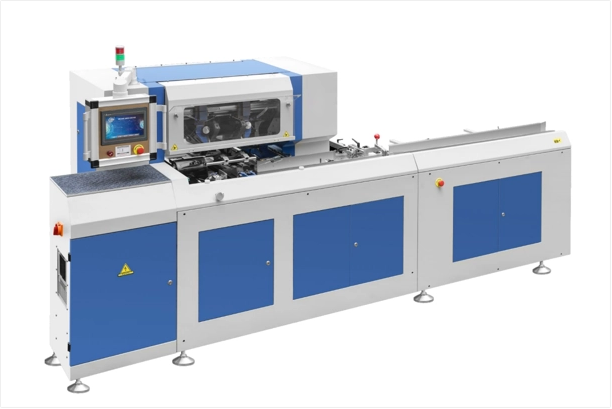
Production delays often occur when connected machines operate at different capacities. A fast cutting machine provides limited benefits when downstream folding cannot maintain its output. Similar problems occur when trimming capacity falls below binding production.
Manufacturers should evaluate each stage using comparable production measurements. Material transfer systems should also support smooth movement between operations.
KOTEN's Reel to Sheets Cutting, Glue Binding and Trimming Production Line provides an example of integrated paper processing and finishing. Its listed operations include reel-to-sheet cutting, glue binding, and trimming. The line should be evaluated according to the required binding method and product specifications.
Tip: Request production trials using your actual paper grades and notebook formats before investing in integrated equipment.
Automatic and semi-automatic production systems offer different advantages. Their suitability depends on production volume, labor availability, factory layout, and investment requirements. A careful comparison helps manufacturers select the appropriate automation level.
Automatic production lines reduce manual transfers between connected manufacturing stages. This can improve throughput while lowering repetitive handling requirements. Operators mainly monitor processes, prepare materials, and manage quality inspections.
Semi-automatic production uses separate machines that may require additional workers. However, these systems can remain suitable for smaller manufacturing operations. Actual labor savings depend on machine configuration and operating conditions.
Automatic systems support repeatable manufacturing through coordinated machine settings. This can improve consistency across large notebook production batches. Accurate feeding and controlled processing also reduce some sources of manual variation.
Semi-automatic equipment can also achieve reliable quality when properly operated. Skilled workers and suitable inspection procedures remain important. Automation improves repeatability but does not eliminate production defects.
Automatic production lines generally require greater initial investment and factory preparation. Their integrated structure can support continuous manufacturing across large orders. However, installation requirements and maintenance complexity may also increase.
Semi-automatic equipment often provides greater flexibility for smaller production operations. Manufacturers can purchase individual machines according to existing needs. This approach may reduce initial capital requirements while allowing gradual production expansion.
Manufacturers should compare equipment capacity against confirmed customer demand. Large, consistent notebook orders may justify integrated automatic lines. Smaller operations may benefit from separate counting, stitching, folding, and trimming equipment.
Comparison Factor | Semi-Automatic Equipment | Automatic Production Line |
|---|---|---|
Initial investment | Generally lower | Generally higher |
Manual handling | More operator involvement | Less repetitive handling |
Production integration | Separate processing stages | Coordinated operations |
Production consistency | Depends on setup and operation | Supports repeatable processing |
Changeover flexibility | Depends on individual machines | Depends on line configuration |
Suitable production | Small to medium batches | Medium to large batches |
KOTEN provides both automation approaches through its Exercise Book Making Solutions. Its automatic solutions connect several manufacturing operations. Semi-automatic configurations use separate ruling, counting, stitching, folding, and trimming equipment. This allows manufacturers to select equipment according to their production scale.
Purchasing efficient machinery is only one part of production improvement. Manufacturers must also optimize operating procedures, maintenance schedules, and production planning. These practices help equipment deliver more consistent performance.
The slowest processing stage often determines the practical capacity of a production line. Manufacturers should identify bottlenecks between cutting, counting, folding, binding, and trimming. Improving the slowest stage can increase overall throughput.
Machine speeds should be converted into comparable production units. For example, cutting cycles and finished notebooks per hour represent different measurements. Accurate capacity calculations help prevent unsuitable equipment combinations.
Correct processing settings help maintain consistent notebook quality. Paper weight, surface characteristics, and dimensions can influence feeding performance. Manufacturers should adjust equipment according to these material properties.
Standardized operating procedures reduce unnecessary adjustments between production batches. Recording successful settings also simplifies future orders. These practices can improve material utilization while reducing production interruptions.
Preventive maintenance helps minimize unexpected equipment failures. Operators should inspect cutting blades, feeding components, folding rollers, and binding mechanisms. They should also follow recommended lubrication and replacement schedules.
Quality inspections should cover notebook dimensions, page quantities, binding strength, and finishing appearance. Identifying defects early prevents unnecessary downstream processing. Maintenance records also help manufacturers identify recurring equipment problems.
Production data helps manufacturers understand actual equipment performance. Useful indicators include finished notebook output, rejection rates, material consumption, and machine downtime.
Production KPI | Measurement | Improvement Goal |
|---|---|---|
Finished output | Notebooks per hour | Increase productive throughput |
Rejection rate | Rejected units ÷ total units | Reduce manufacturing defects |
Material utilization | Usable material ÷ total material | Reduce paper waste |
Machine downtime | Unplanned stopped time | Improve equipment availability |
Changeover time | Minutes between production batches | Reduce setup delays |
Manufacturers should compare these measurements across similar production conditions. Consistent monitoring helps identify opportunities for future improvement.
Tip: Record daily finished output and rejected quantities before upgrading equipment to establish a reliable performance baseline.
Selecting suitable equipment requires a clear understanding of production requirements. Manufacturers should evaluate machine capabilities, operating costs, and supplier support. These factors influence both immediate productivity and long-term performance.
Equipment capacity should match expected order volumes and product specifications. Manufacturers must consider notebook size, page count, paper weight, and binding style. These factors directly influence processing speed.
KOTEN's published exercise book solutions information describes automatic configurations designed for substantial daily output. Its stated production range reaches approximately 30,000–100,000 books daily, depending on notebook specifications. These are supplier-reported figures rather than guaranteed output for every model.
Buyers should request production demonstrations using their intended notebook formats. This provides a more realistic assessment of machine capacity.
Cutting dimensions and folding capabilities must match the intended notebook products. Manufacturers should verify supported paper weights, sheet sizes, and binding requirements. Incompatible equipment may create processing difficulties or unnecessary waste.
For example, KOTEN's SZJ-800D desktop counting machine lists a 22–186 gsm paper range. Its supported paper dimensions extend from 55 × 90 mm to 350 × 660 mm. These specifications help manufacturers evaluate its suitability for separate sheet-counting operations.
Factory layout affects material movement and operating efficiency. Manufacturers should measure available space before selecting equipment. They must also consider power requirements, operator access, and maintenance clearance.
Integrated lines may reduce transfers between production stages. Separate machines provide opportunities for phased equipment investment. Both approaches require suitable production planning.
Machine selection should consider more than the initial purchase price. Energy consumption, maintenance requirements, spare parts, and operator training affect long-term operating costs. Reliable supplier support can also reduce disruption during installation and maintenance.
Manufacturers should confirm warranty terms and technical documentation before purchasing. They should also ask about replacement components and installation support.
KOTEN Machinery provides bookbinding, exercise book manufacturing, and paper converting equipment. Its product range supports different automation requirements and manufacturing applications. Buyers can discuss equipment configurations based on factory capacity, notebook specifications, and production objectives.
Tip: Provide suppliers with notebook dimensions, paper specifications, binding methods, and target daily output when requesting quotations.
An Exercise Book Making Machine improves notebook manufacturing efficiency through automation, precise cutting, and coordinated production. It reduces manual labor, minimizes paper waste, and ensures consistent product quality.
Proper machine selection and regular maintenance help manufacturers increase output and reduce downtime.
KOTEN Machinery offers automatic and semi-automatic notebook production solutions, including paper counting, binding, and trimming equipment. Its technical support helps manufacturers optimize workflows and achieve reliable production performance.
A: An Exercise Book Making Machine automates notebook production processes.
A: An Exercise Book Making Machine reduces manual handling and increases production speed.
A: An automatic Exercise Book Making Machine improves accuracy, consistency, and productivity.
A: Automation reduces labor requirements, paper waste, and processing errors.
A: Automatic lines offer higher integration, while semi-automatic equipment requires less investment.
A: Regular maintenance and proper adjustments reduce unexpected stoppages.


