
Views: 0 Author: Site Editor Publish Time: 2026-10-17 Origin: Site
What makes luxury packaging stand out on crowded shelves? Precise corners, smooth wrapping, and consistent quality create lasting impressions. A Rigid Box Making Machine improves premium packaging through accurate forming and automated production. In this article, discover how it enhances packaging quality, reduces defects, and improves manufacturing efficiency.
Premium packaging requires more than attractive printed materials. Box dimensions, corner shapes, wrapping quality, and structural consistency all influence the finished product. A rigid box making machine helps manufacturers control these important production details.
Accurate box forming helps manufacturers produce consistent dimensions and stable structures. Controlled positioning ensures greyboard components align correctly during assembly. This improves the appearance and fit of finished rigid boxes.
Dimensional consistency becomes especially important for separate lids and bases. Poor alignment may create uneven gaps or unsuitable fitting. A high precision rigid box forming machine helps reduce these problems through repeatable positioning and controlled forming operations.
Clean corners contribute significantly to premium packaging appearance. Uneven folding or inaccurate grooving can create visible defects along rigid box edges. These problems may affect the presentation of expensive retail products.
Precision grooving prepares greyboard for controlled folding. Suitable groove angles help create sharper corners and cleaner structural lines. However, final results also depend on board thickness and wrapping quality. Manufacturers should verify corner appearance before beginning large production batches.
Decorative wrapping transforms a basic greyboard structure into attractive premium packaging. Printed paper, textured materials, and specialty finishes require careful alignment. Incorrect positioning can create uneven borders or inconsistent decorative patterns.
Automatic positioning systems help align decorative paper before forming and wrapping. Controlled adhesive application also supports smooth surface bonding. These operations reduce visible wrinkles and placement variations when correctly adjusted. Consistent wrapping improves the overall appearance of luxury packaging.
Premium brands expect consistent packaging across entire product collections. Variations in box dimensions or decorative finishes can affect visual presentation. Large orders make these inconsistencies particularly noticeable.
Automated rigid box manufacturing supports repeatable production through controlled machine settings. Stable positioning helps maintain consistent structures and wrapping alignment. Manufacturers should combine automated processing with regular product inspections. This approach supports reliable quality across repeated production batches.
Traditional rigid box manufacturing may involve several manual positioning and assembly operations. Workers must align components, apply adhesive, form corners, and complete wrapping. Repeated handling can introduce production variations.
An automatic rigid box making machine reduces some of these repetitive operations. Automated feeding and positioning improve workflow consistency while reducing manual intervention. Operators can focus on monitoring equipment and inspecting finished boxes. The actual labor reduction depends on machine configuration.
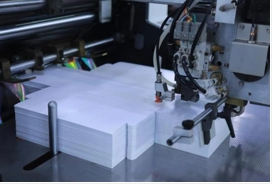
Premium packaging production often involves multiple connected processing stages. Delays between grooving, positioning, forming, and wrapping can reduce manufacturing output. Coordinated equipment helps maintain smoother material movement.
KOTEN's Automatic Visual Position Rigid Box Making Machine demonstrates this approach. Its S6416YZ model combines servo-controlled paper feeding, glue viscosity control, and image positioning. The listed positioning precision is within ±0.1 mm, while rated production reaches 25–30 pieces per minute. Actual finished output depends on product specifications and operating conditions.
Premium packaging manufacturers produce boxes for different industries and product categories. Gift boxes, cosmetic packaging, jewelry boxes, and electronics packaging require different dimensions and finishes. Suitable machinery helps accommodate these requirements.
Some rigid box machines support adjustable box dimensions and forming settings. This flexibility allows manufacturers to produce several packaging formats. However, equipment limitations must be checked carefully. Complex shapes and specialized materials may require additional processing equipment.
Tip: Packaging manufacturers should test actual box dimensions, wrapping materials, and corner finishes before confirming large production orders.
Rigid box manufacturing usually involves several connected processing stages. Each operation contributes to the finished structure and appearance. Understanding the process helps manufacturers improve quality and coordinate equipment.
Production begins by preparing greyboard according to the required box dimensions. Cutting equipment creates suitable board components for assembly. Grooving machines then produce controlled folding lines along designated positions.
The LS-1200PRO provides an example of specialized greyboard preparation equipment. Its manufacturer describes adjustable grooving angles ranging from 80° to 140°. The machine also features dual blade seats and automatic material collection. These functions support controlled board preparation before box forming.
Decorative paper gives rigid packaging its final visual appearance. Manufacturers may use printed paper, specialty textures, or laminated materials. Accurate feeding helps maintain consistent paper placement during production.
Adhesive application must also remain controlled. Uneven glue distribution may cause bubbles, weak bonding, or surface marks. Robotic positioning systems can improve alignment between decorative paper and greyboard components. This supports more consistent packaging finishes.
Corner pasting connects prepared greyboard components into a stable box structure. Forming equipment then shapes the material according to required dimensions. Wrapping operations secure decorative paper around the assembled box.
Selected automatic systems use robotic positioning to improve placement consistency. Yamaha positioning technology appears in several industrial rigid box manufacturing configurations. These systems help coordinate material alignment before forming. However, final accuracy depends on complete machine operation and material conditions.
After forming, suitable pressing operations help secure decorative materials against the box structure. This improves surface bonding and helps maintain the intended appearance. Finished boxes then proceed to inspection and collection.
Operators should examine dimensions, corner alignment, wrapping margins, and adhesive performance. They should also check lid fitting when applicable. Identifying defects before packaging helps reduce returned products and unnecessary rework.
Equipment features directly influence rigid box manufacturing consistency. Accurate positioning, controlled grooving, stable gluing, and adjustable settings contribute to premium results. Buyers should understand how these systems affect finished packaging.
Positioning accuracy influences the alignment between decorative paper and greyboard components. Incorrect placement can produce uneven wrapping margins or distorted printed patterns. These defects are particularly noticeable on luxury packaging.
KOTEN's visual positioning equipment uses an image positioning system and Yamaha manipulator. The manufacturer's published specifications identify positioning precision within ±0.1 mm for model S6416YZ. This value describes the positioning system rather than guaranteed finished box tolerance. Manufacturers should verify completed box dimensions under actual production conditions.
Grooving depth and angle influence how greyboard folds during assembly. Incorrect settings can create rounded edges, damaged surfaces, or inconsistent corners. Proper preparation supports more refined box structures.
Specialized equipment allows manufacturers to adjust groove positions according to board thickness. The LS-1200PRO's adjustable grooving angles provide flexibility for different structural requirements. However, it performs grooving rather than complete box forming. Manufacturers must combine suitable preparation and forming equipment.
Adhesive consistency is essential for premium decorative wrapping. Excess glue can create stains or surface irregularities. Insufficient adhesive may produce weak bonding and lifting edges.
Automatic gluing systems help maintain controlled adhesive application. Suitable wrapping mechanisms support consistent folding and material positioning. KOTEN's S6416YZ also includes an automatic glue viscosity control device. This helps operators manage adhesive conditions during production.
Premium packaging orders frequently require different box sizes and designs. Adjustable controls help operators change processing parameters between production batches. This can reduce setup difficulties for recurring products.
Programmable equipment also supports more repeatable operating conditions. However, each new configuration requires sample verification. Manufacturers should check positioning, adhesive application, and finished dimensions before full production.
Tip: Machine positioning precision and finished box dimensional tolerance are different specifications and should be evaluated separately.
Efficient premium packaging production requires consistent quality and controlled material consumption. Automated operations can reduce unnecessary handling and processing interruptions. However, equipment settings must match the intended packaging materials.
Automatic positioning and forming equipment can reduce repetitive manual operations. Coordinated material feeding also helps maintain continuous production. These improvements become valuable when manufacturing large quantities of similar boxes.
Actual productivity depends on more than maximum machine speed. Changeover time, material preparation, and rejected products influence usable output. Manufacturers should measure accepted finished boxes per hour when evaluating production efficiency.
Incorrect grooving can damage greyboard before box assembly begins. Poorly positioned grooves may create unsuitable folds or uneven corners. Defective components often require replacement rather than simple adjustment.
Accurate feeding and controlled grooving help reduce these problems. Operators should match groove settings to material thickness and structure. Sample inspections before full production can prevent avoidable material losses.
Decorative wrapping errors can increase production costs significantly. Uneven paper positioning, unsuitable adhesive application, and incorrect folding create visible defects. These problems may require complete box replacement.
Consistent gluing and positioning help reduce wrapping variations. Operators should also verify adhesive compatibility and drying conditions. Early quality checks prevent defective components from reaching later processing stages.
Grooving and box forming equipment must operate at compatible capacities. A faster preparation machine provides limited benefits when downstream forming cannot maintain its output. This mismatch can create material accumulation.
Manufacturers should compare each machine's usable production capacity. Suitable transfer arrangements help reduce waiting time between operations. Clear production scheduling also supports more consistent material flow.
Automatic and semi-automatic manufacturing systems serve different production requirements. Their suitability depends on order quantities, box specifications, and available investment. Manufacturers should compare their complete operating requirements.
Automatic production equipment connects more operations into coordinated manufacturing sequences. It can reduce repeated manual positioning and material handling. This often improves production consistency during larger orders.
Semi-automatic systems generally require additional operator involvement. However, they can remain practical for smaller operations and customized packaging. Actual labor requirements depend on equipment configuration and production complexity.
Automated positioning systems help maintain consistent material alignment. This supports repeatable box forming and decorative wrapping. However, automation alone does not guarantee premium quality.
Semi-automatic equipment can also produce refined packaging when properly operated. Skilled workers and regular inspections remain important. Material consistency and suitable machine settings influence both production methods.
Automatic equipment generally requires greater initial investment and installation planning. Integrated systems may also require more specialized maintenance. Their productivity advantages become more attractive during frequent large orders.
Semi-automatic machines often provide accessible options for smaller manufacturers. They can support gradual production expansion through individual equipment purchases. Buyers should consider operating costs alongside initial investment.
Production quantity should guide equipment selection, but design complexity also matters. Large recurring orders may benefit from automatic positioning and forming. Smaller custom projects may require flexible semi-automatic processes.
Comparison Factor | Semi-Automatic Equipment | Automatic Rigid Box Production |
|---|---|---|
Initial investment | Generally lower | Generally higher |
Manual handling | More operator involvement | Reduced repetitive handling |
Positioning consistency | Depends on setup | Supports automated repeatability |
Production capacity | Often suitable for smaller batches | Often suitable for larger orders |
Changeover flexibility | Depends on individual equipment | Depends on machine configuration |
Maintenance | Often simpler | May involve integrated systems |
Typical applications | Custom and smaller production | Repeated premium packaging orders |
KOTEN offers different equipment configurations through its Rigid Box Solutions. The category includes fully automatic machines, semi-automatic solutions, and specialized processing equipment. Manufacturers can compare these options according to their production requirements.
Rigid packaging supports product presentation across several premium industries. Different applications require suitable dimensions, decorative materials, and structural details. Accurate forming helps maintain consistent results.
Luxury gift boxes require attractive structures and consistent decorative finishes. Clean edges and accurate corners contribute to professional presentation. Suitable rigid box equipment helps manufacturers maintain these characteristics.
Gift packaging may include printed paper, specialty textures, or decorative elements. Manufacturers should match forming equipment to the required box dimensions. Consistent production quality helps maintain uniform presentation across large retail orders.
Cosmetic and perfume products often use carefully designed premium packaging. Sharp corners, consistent wrapping margins, and smooth surfaces support attractive product presentation. Poorly finished boxes can weaken the intended visual effect.
A rigid box making machine for cosmetic packaging helps manufacturers control forming and alignment. Suitable grooving also supports well-defined corners. Buyers should verify compatibility with decorative paper and adhesive materials.
Jewelry and watch packaging often requires precise dimensions and carefully aligned components. Decorative inserts must fit inside the finished structure. Separate lids and bases also require suitable dimensional consistency.
High precision forming equipment helps manufacturers maintain more repeatable structures. However, insert preparation may require additional processes. Buyers should verify the complete packaging requirements before selecting equipment.
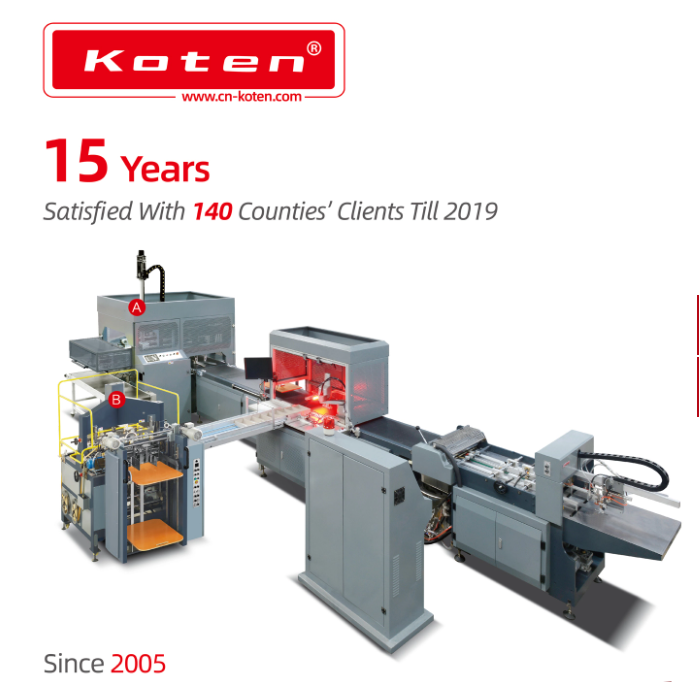
Premium electronics packaging frequently combines rigid outer boxes and internal protective inserts. Accurate dimensions help the components fit together correctly. Consistent construction also supports uniform retail presentation.
KOTEN's Automatic Rigid Box Making Machine, model S460Y/600Y, supports folding, wrapping, and forming operations for gift and packaging boxes. Its listed functions include continuous forming operations and adjustable operating speed. Manufacturers should verify supported dimensions and materials for specific electronics packaging applications.
Tip: Packaging suppliers should test actual decorative materials, box structures, and internal inserts before confirming customized orders.
Consistent premium packaging requires reliable equipment and controlled manufacturing procedures. Small variations in materials or machine settings can affect finished appearance. Regular inspection helps manufacturers identify problems before they affect large orders.
Greyboard thickness influences folding behavior and structural strength. Incorrect grooving can create uneven corners or damage board surfaces. Manufacturers should select groove dimensions according to material specifications.
Before full production, operators should inspect sample grooves and folding results. They should also confirm alignment between different board components. These checks help maintain consistent box structures and reduce unnecessary waste.
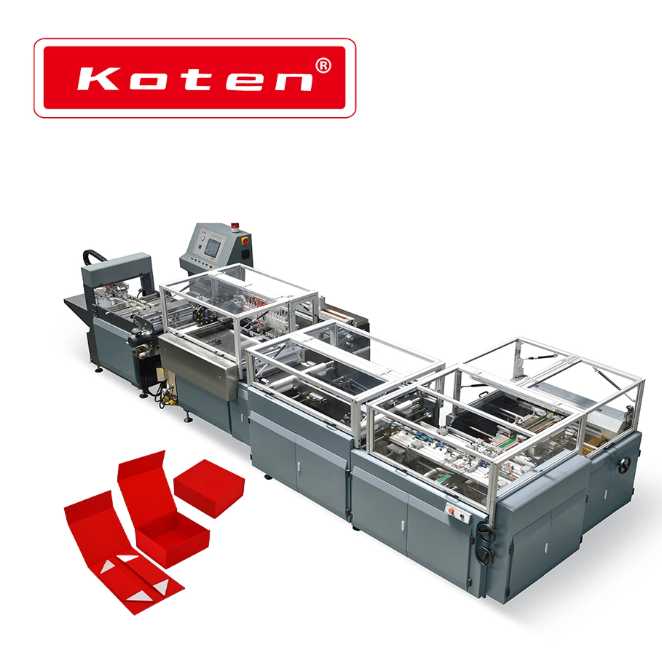
Decorative paper alignment strongly influences premium packaging appearance. Incorrect positioning may create uneven borders or distorted printed graphics. Manufacturers should establish suitable positioning settings before production.
Adhesive selection also requires careful attention. Material type, coating properties, and drying conditions affect bonding performance. Sample production helps confirm suitable combinations and identify potential defects.
For specialized wrapping preparation, KOTEN's Automatic Cover Making Machine for Rigid Box provides a related processing option. Model QFM-600B is listed within the company's semi-automatic rigid box solutions category. It supports cover-making operations rather than replacing every stage of rigid box production.
Regular quality checks help identify dimensional and finishing variations. Operators should measure box dimensions and examine corner alignment. They should also inspect wrapping margins, surface appearance, and adhesive bonding.
Approved reference samples provide a consistent comparison standard. Manufacturers should inspect products throughout production rather than only at completion. Early detection reduces unnecessary rework and rejected finished boxes.
Machine maintenance helps preserve positioning accuracy and reliable operation. Operators should inspect feeding systems, forming mechanisms, and alignment components. Grooving blades also require suitable inspection and replacement.
Production records can identify recurring quality problems. Useful indicators include rejected boxes, machine downtime, and accepted output. Manufacturers can use these measurements to improve operating procedures.
Tip: B2B manufacturers should establish approved reference samples and record dimensional deviations for every recurring packaging design.
Selecting suitable equipment requires balancing product quality and production requirements. Manufacturers should evaluate box dimensions, automation functions, material compatibility, and supplier support. These considerations influence manufacturing performance and long-term operating costs.
Machine capacity should match actual packaging order requirements. Manufacturers must consider box dimensions, production quantities, and design complexity. Different structures may require different forming arrangements.
For example, KOTEN's S6416YZ visual positioning machine lists a production speed of 25–30 pieces per minute. Its supported box dimensions and board specifications are also defined by the manufacturer. These figures should guide initial equipment evaluation rather than guarantee actual output. Sample testing remains essential.
Premium packaging quality depends on accurate component positioning and suitable board preparation. Buyers should verify supported board thicknesses, decorative paper specifications, and forming dimensions. Grooving requirements should also match the intended box structure.
The LS-1200PRO specializes in greyboard and paper grooving. Its adjustable angles support different folding requirements. However, it does not independently complete all box forming and wrapping operations. Manufacturers should distinguish specialized machines from complete production systems.
Factory space influences equipment selection and production layout. Manufacturers should confirm machine dimensions and maintenance clearance. They should also consider material feeding and transfer requirements.
Automatic rigid box production may involve several coordinated operations. These include gluing, positioning, corner pasting, and forming. Buyers should confirm whether individual functions are integrated or require separate equipment. Suitable workflow planning helps reduce unnecessary material handling.
Equipment purchasing decisions should consider long-term operating requirements. Machine construction, maintenance accessibility, and replacement parts affect production reliability. Installation and operator training also influence successful implementation.
KOTEN Machinery offers rigid box manufacturing and related packaging equipment. Its product range includes automatic forming machines, visual positioning systems, and specialized cover-making solutions. Buyers should compare these options according to their actual packaging requirements.
Before investing, manufacturers should request technical specifications and sample production demonstrations. They should also confirm warranty conditions and available support services.
Tip: Buyers should provide suppliers with box dimensions, board thickness, wrapping materials, and target output before requesting quotations.
A Rigid Box Making Machine improves premium packaging through precise forming, smooth wrapping, and consistent finishing. It helps manufacturers reduce defects, material waste, and manual handling. Accurate positioning and automated operations support high-quality gift, cosmetic, and jewelry boxes. Proper equipment selection and maintenance ensure reliable production.
KOTEN Machinery offers automatic rigid box machines, visual positioning systems, and cover-making equipment. Its packaging solutions help manufacturers improve efficiency, maintain quality, and meet diverse production needs.
A: A Rigid Box Making Machine forms sturdy boxes for premium packaging.
A: A Rigid Box Making Machine improves corner accuracy, wrapping, and finishing consistency.
A: An automatic Rigid Box Making Machine reduces manual handling and increases productivity.
A: Automatic systems offer greater efficiency, while semi-automatic machines suit smaller batches.
A: Prices depend on automation, production capacity, and features.
A: Incorrect grooving, positioning, or material settings can cause defects.


