
Views: 0 Author: Site Editor Publish Time: 2026-09-26 Origin: Site
Does your luxury packaging stand out on the retail shelf or during the e-commerce unboxing experience? Today, premium brands constantly struggle to balance flawless box quality with the demand for rapid, cost-effective production. Achieving this delicate balance is rarely a matter of manual skill. It hinges entirely on selecting the right automated solutions. In this comprehensive guide, we will drill down into how the physical dimensions of your packaging and the chosen forming methods directly dictate machine output. You will see how these factors impact operational efficiency and your ultimate return on investment.
Size Dictates Speed: The physical footprint of your packaging inherently governs the mechanical speed, throughput, and changeover intervals of your production line.
Forming Methods Matter: Whether executing a seamless full-wrap or a cost-effective partial-wrap, the forming method determines both the aesthetic appeal and the specific mechanical configurations required.
Automation is Non-Negotiable: Modern facilities rely on visual positioning cameras and servo-driven motors to navigate complex geometries without sacrificing output velocity.
ROI is Rooted in Flexibility: Committing capital to adaptable equipment that processes a diverse spectrum of dimensional specifications secures long-term profitability and market agility.
For procurement teams and facility managers evaluating capital investments in packaging operations, grasping the foundational mechanics of automated assembly is critical. This equipment is specifically engineered to transform flat raw substrates into structurally robust, aesthetically flawless premium packaging. Typically, this involves dense greyboard and highly finished cover paper. Unlike standard folding carton lines, these heavy-duty systems must manipulate thicker boards and apply micro-thin layers of adhesive to guarantee a bubble-free, luxurious finish.
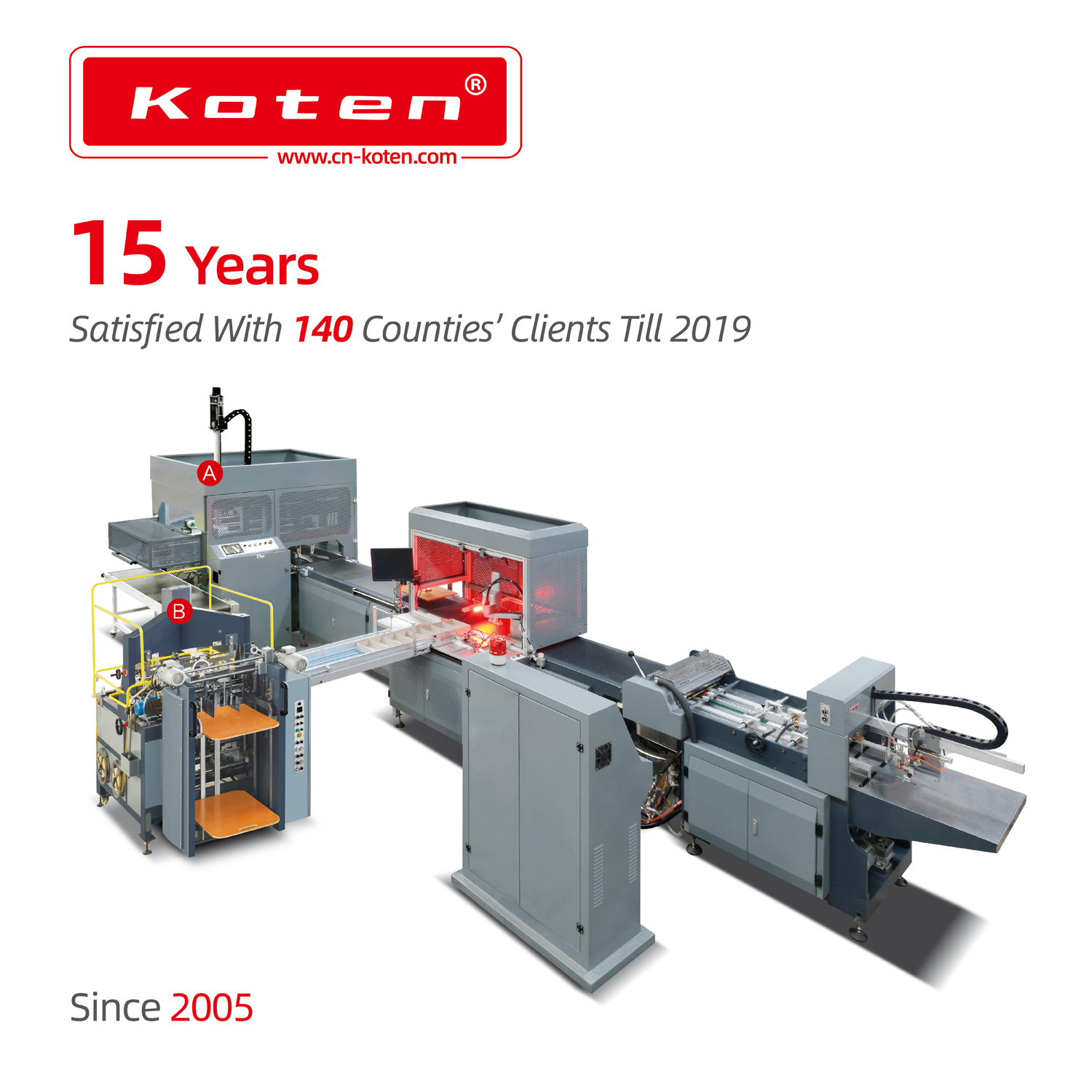
A fully automated production line is not merely a single tool. It is a highly synchronized sequence of specialized modules. Drilling down into these components helps in evaluating the true capability of any gift box making machine currently on the market.
The Feeder Unit: Utilizing high-capacity vacuum suction, this section pulls the base cover paper and the die-cut cardboard blanks into the system. Precision at this initial stage is vital. Double-feeding can lead to catastrophic mechanical jams and ruined substrates.
The Gluing System: Operating with temperature-controlled hot-melt animal jelly glue or specialized cold adhesives, this unit coats the cover paper. Maintaining consistent viscosity is paramount. During cold winter shifts, operators often battle glue stringing. An intelligent heating system prevents the adhesive from curing prematurely before wrapping occurs.
Visual Positioning System: High-definition industrial cameras track the glued paper on the conveyor. A robotic arm or pneumatic placement module utilizes this real-time data to marry the cardboard to the paper with exact precision.
The Forming and Wrapping Unit: In this final stage, the glued paper is seamlessly stretched and folded around the rigid board. The mechanics tuck the paper neatly over the rims to conceal all raw edges.
The industry-wide transition from semi-automatic labor toward fully automated setups is primarily driven by the unforgiving quality tolerances of the luxury sector. In markets spanning high-end cosmetics, boutique electronics, and designer apparel, inconsistencies are simply unacceptable. Manual assembly inevitably introduces variables like slightly misaligned edges, microscopic glue smears, or uneven paper tension. These flaws cause the surface to bubble months later in a retail warehouse.
Automated machinery systematically eliminates these human-induced variables. By leveraging programmable logic controllers alongside unyielding mechanical precision, manufacturers can guarantee absolute consistency across runs of fifty thousand units. This automation insulates packaging businesses from the volatility of specialized labor shortages, stabilizing long-term operational overhead.
From a practical engineering standpoint, the dimensions of the target packaging are the most influential variables on the factory floor. Box size dictates the laws of physics within the machine. It governs everything from the required pneumatic suction pressure to the maximum safe velocity of the folding tuckers.
Production efficiency is universally measured in pieces per minute. Unsurprisingly, there is a strict inverse relationship between the physical bulk of the box and the achievable output. Smaller items, such as compact ring boxes or delicate perfume packaging, occupy a minimal physical footprint. The mechanical arms and servo motors need to travel exceptionally short distances to complete a full wrapping cycle. Consequently, a premium rigid box forming machine can reliably process these micro-boxes at brisk speeds of 25 to 35 pieces per minute.
Conversely, large-format packaging forces the machine components to traverse a much wider operational area. Think of boxes engineered for winter boots, heavy consumer electronics, or luxury outerwear. The greyboard is significantly heavier, demanding that vacuum cups hold their grip longer to prevent slippage. The expansive sheets of cover paper require slower, highly controlled wrapping strokes to prevent wrinkling. For these large boxes, production speeds naturally taper off, typically stabilizing between 10 and 18 pieces per minute to uphold strict quality control standards.
| Box Category | Typical Dimensions | Average Speed | Mechanical Challenge | Ideal Application |
|---|---|---|---|---|
| Micro & Small | 80x50x15 mm | 25 - 35 pcs/min | Tucker collision in tight cavities | Jewelry, Cosmetics, Watches |
| Medium Standard | 250x150x60 mm | 18 - 25 pcs/min | Balancing tension and speed | Smartphones, Perfumes, Gifts |
| Large Format | 600x400x120 mm | 10 - 18 pcs/min | Vacuum slippage, paper wrinkling | Apparel, Shoes, Electronics |
In modern contract manufacturing, dedicating a line to a single box size for months on end is a rarity. Facilities must frequently pivot between diverse client orders, necessitating mechanical changeovers. Historically, swapping out molds, realigning glue rollers, and manually recalibrating camera sensors consumed hours of highly skilled technician time. This downtime represented a massive hemorrhage in daily revenue.
Today, advanced equipment neutralizes this bottleneck through digital recipe memory and servo-driven automation. Operators simply input the new dimensions via an intuitive touchscreen interface. The machine then autonomously adjusts its guide rails, optical sensors, and folding parameters. This technological leap compresses changeover times from several hours to mere minutes, unlocking significantly higher daily throughput.
Once the dimensional parameters are established, the next critical hurdle is mastering the forming method. The specific technique used to manipulate the cover paper around the rigid board ultimately defines the structural integrity and the tactile unboxing experience of the final product.
The chosen wrapping technique will heavily influence the required configuration of your equipment.
The Full-Wrap is universally recognized as the gold standard for luxury presentation. The cover material wraps entirely around the exterior walls, crests over the top rim, and folds deeply into the interior cavity of the box. This meticulous method conceals all raw cardboard edges, yielding a seamless, monolithic finish. Achieving this requires complex, multi-axis mechanical movements and flawless tension control to prevent the paper from tearing at the corners.
Alternatively, the Partial-Wrap method involves wrapping the paper around the exterior but halting at the top edge, or folding only slightly over the rim. This leaves the interior greyboard exposed, which is typically masked later by a custom insert. While this approach is mechanically faster and consumes less expensive art paper, it inherently lacks the ultra-premium feel of a fully lined box.
While standard rectangular designs are relatively straightforward, contemporary packaging trends frequently demand complex geometries. Brands increasingly request trapezoidal shapes, T-shape folding, or designs featuring dramatically deep interior folds. To execute these intricate designs, an advanced box wrapping machine leverages multi-axis robotic arms and servo-driven tucking blades.
Unlike legacy pneumatic cylinders that operate in a harsh binary motion, servo motors apply variable pressure and modulated speed throughout a single stroke. This nuanced control allows the machine to gently stretch delicate foil-stamped substrates or textured velvet papers over sharp corners. It applies exact tension without causing micro-tears.
Recent market analyses reveal a significant shift in the gift packaging sector, heavily influenced by e-commerce logistics. As global shipping carriers increasingly adopt dimensional weight pricing, premium brands are aggressively optimizing their box sizes to reduce freight costs. They demand smaller, highly compact packaging that still delivers a dramatic, multi-layered unboxing experience.
Consequently, manufacturers are under immense pressure to produce intricate, deep-folded micro-boxes. This industry-wide trend underscores the absolute necessity for machinery equipped with sub-millimeter visual positioning and highly responsive miniaturized tuckers. Traditional, bulky pneumatic systems simply cannot navigate the tight internal cavities of these modern, optimized packaging designs without causing damage.
Furthermore, global regulatory shifts are forcing the rapid adoption of sustainable packaging. Future-proof machinery must be fully compatible with eco-friendly consumables. This includes the mechanical ability to cleanly process fully recycled greyboard, which can often be more brittle and prone to dust than virgin board, without jamming the feeder tracks.
When a facility is ready to upgrade its infrastructure, comparing technical specifications can be overwhelming. However, certain technological features distinctly separate entry-level tools from high-performance industrial assets. You must evaluate cardboard box equipment based on actionable criteria.
Relying on mechanical positioning is a recipe for variance. Over thousands of cycles, metal guides wear down and shift, leading to subtle but disastrous misalignments. Modern equipment utilizes high-definition camera tracking to circumvent this issue.
As the glued paper travels down the line, a high-resolution camera captures its exact coordinates. A centralized computer calculates the precise center point and directs a robotic arm to place the cardboard shell onto the paper. Look for systems that guarantee a positioning accuracy of ±0.1mm. Such precision is non-negotiable for luxury boxes featuring intricate foil-stamped borders or embossed logos that must align perfectly with the physical edges of the box.
A truly versatile machine must effortlessly process a wide spectrum of raw materials. Ensure the equipment can handle greyboard thickness fluctuating from a flimsy 1mm up to a dense 3mm. Cover materials are even more varied, ranging from standard 100gsm coated paper to synthetic leathers, heavy linens, and deeply embossed specialty papers.
Procurement teams must verify that the gluing unit features micro-adjustable scraper blades and robust temperature controls. This flexibility is required to accommodate both standard hot-melt adhesives and the specialized cold glues often necessary for synthetic, heat-sensitive fabrics.
Acquiring a fully automated production line is a substantial capital expenditure. Justifying this investment to stakeholders requires a clear, quantifiable understanding of how the luxury box machinery generates a return on investment that extends far beyond mere output volume.
The most immediate and visible financial impact of automation is the drastic reduction in labor overhead. A fully automated line typically requires only one or two trained operators to monitor the interface screen and load raw materials. This effectively replaces traditional assembly lines that previously required dozens of manual workers to glue, position, and fold.
Beyond direct payroll savings, automation eradicates the hidden tax of human error. Operator fatigue inevitably leads to misaligned paper, accidental glue smears, and inconsistent corner folds, resulting in crippling rejection rates. Automated systems do not get tired. They ensure that the final box produced at the end of a grueling shift is identical in quality to the very first.
Investing in highly adaptable equipment transforms a packaging company's strategic market positioning. A machine capable of executing complex forming methods across a broad dimensional range allows a business to confidently bid on lucrative, diverse contracts. A facility can seamlessly transition from producing tiny, intricate jewelry boxes for a boutique brand on Tuesday, to churning out robust packaging for a consumer electronics giant on Thursday. This operational scalability is the ultimate driver of long-term, sustainable profitability.
The production speed of automated packaging equipment typically ranges from 15 to 35 boxes per minute. However, this metric is highly variable. Actual throughput depends heavily on the specific box size and the complexity of the forming method. Smaller, simpler designs like shallow cosmetic boxes can often run at maximum speeds. Large apparel boxes or designs requiring deep inner folding will necessitate slower mechanical movements to ensure perfect tension and avoid material tearing.
No single machine is engineered to handle every conceivable box size. Every piece of equipment operates within specific minimum and maximum dimensional parameters dictated by its physical chassis, conveyor width, and the maximum reach of its robotic arms. When investing in machinery, buyers must analyze their historical sales data to determine their most frequent production sizes, selecting a machine that comfortably covers their core product lines.
While the terms are frequently used interchangeably in the industry, they technically refer to different levels of automation. A box wrapping machine typically refers to a specific standalone module that takes a pre-glued, pre-assembled cardboard shell and applies the outer decorative paper. In contrast, a fully automatic rigid box making machine is a comprehensive integrated system. It handles the entire process from start to finish: feeding the paper, applying the adhesive, positioning the cardboard via camera, and executing the final wrapping and folding.
For high-end luxury packaging, the full-wrap method paired with deep inner folding is universally considered the industry standard. This technique ensures that the premium outer paper wraps completely over the top edges and extends deep into the interior of the box. All raw cardboard edges are entirely hidden from the consumer's view, providing the seamless, highly refined aesthetic that premium brands demand for the ultimate unboxing experience.
The time required for mechanical changeovers has decreased dramatically thanks to technological advancements. On older mechanically driven models, changing from a small cosmetic box to a large shoe box could take experienced technicians anywhere from 1 to 3 hours of manual wrenching and calibration. Modern machines equipped with servo motors, digital memory storage, and automated guide rails can complete a full size changeover in approximately 10 to 30 minutes, drastically improving daily operational uptime.
Most industrial-grade automated machines are designed to process rigid greyboard ranging from 1mm to 3mm in thickness. Pushing beyond the 3mm threshold often requires specialized heavy-duty grooving and corner-staying modules, as standard tucking blades may struggle to fold the outer paper cleanly over such a thick edge without tearing the material.
Glue stringing is a common issue when ambient factory temperatures drop, causing hot-melt animal jelly glue to cool too rapidly. To combat this, modern machines feature intelligent, continuous heating systems within the glue tank and along the application rollers. Operators should also ensure the factory's ambient temperature is regulated and may need to slightly increase the glue tank temperature setting to maintain optimal adhesive viscosity.
Balancing size, speed, and forming complexity is the key to dominating the premium packaging market. If you are struggling with high rejection rates, slow changeovers, or machinery that cannot handle the intricate designs your clients demand, it is time to evaluate your hardware. We encourage facility managers and procurement teams to explore high-performance solutions tailored to your specific dimensional needs. Discover the right automated fit for your production floor by reviewing the advanced equipment available at Koten Machinery today.


