
Views: 0 Author: Site Editor Publish Time: 2026-09-25 Origin: Site
Recent global market data indicates a massive pivot in the packaging sector. Strict single-use plastic bans are sweeping across major global markets. Consequently, the demand for sustainable alternatives has increased sharply. Industry analyses highlight a surging preference for block-bottom designs across e-commerce, grocery, and quick-service restaurant sectors. This explosive growth places immense pressure on packaging facilities. Manufacturers must scale up output rapidly while maintaining strict structural integrity.
Many procurement managers fall into a common trap. They assume buying the fastest equipment automatically guarantees the highest daily yield. On the factory floor, actual capacity tells a different story. True daily output is highly conditional. It depends entirely on a complex interplay of specific production variables.
This technical guide breaks down how bag dimensions, material thickness, and mechanical speed directly influence your factory floor output. By understanding these physical constraints, technical directors can make informed decisions and optimize their production lines for maximum profitability.
Capacity is Conditional: A machine's maximum rated speed serves merely as a theoretical baseline. Actual output is heavily dictated by the physical dynamics between bag dimensions and material properties.
Size Dictates Cycle Time: Larger formats require longer feeding, forming, and folding durations. This physical requirement naturally reduces the bags-per-minute rate compared to producing smaller pouches.
Paper Weight Controls the Pace: Heavyweight materials necessitate slower operational speeds to ensure precise folding and adequate glue penetration. Lightweight paper runs at blistering speeds but demands highly precise web tension control.
Purpose-Built Machinery Yields Better ROI: Aligning your equipment choice with your primary product line ensures better long-term mechanical efficiency. A generic setup often falls short in specialized applications.
Automation Minimizes Variance: Investing in modern servo-driven technology minimizes manual downtime and material waste. This significantly boosts practical daily capacity.
The square bottom design is the foundational architecture of the modern sustainable packaging industry. Unlike flat-bottom or pinch-bottom variants, this structure allows the bag to stand upright independently. This feature makes it the preferred choice for retail checkout counters and fast-food delivery. Grasping how this machinery operates is the first step for engineers aiming to optimize their floor capacity.
In industrial-scale manufacturing, continuous processing is the ultimate goal. A roll fed paper bag machine represents the gold standard for high-volume, uninterrupted production. Rather than dealing with the micro-delays of feeding individual pre-cut sheets, this system draws raw material directly from a massive continuous jumbo paper roll. The web travels through a series of synchronized inline stations. These include tube forming, gusseting, rotary cutting, bottom gluing, and final folding.
This continuous kinetic motion is inherently superior for high-capacity requirements. By maintaining a steady high-speed rhythm, the equipment reduces mechanical wear and minimizes operator intervention. This efficiency significantly lowers the cost per unit.
The output capabilities of these production lines rely on the seamless synchronization of several core modules. The unwinding and web control unit utilizes hydraulic lifts to handle heavy rolls. It employs magnetic powder brakes and load cells to maintain constant tension. As the flat paper enters the tube forming section, forming plates shape it into a continuous cylinder while simultaneously inserting side gussets.
Subsequently, a high-precision rotary cutter severs the tube to the exact required length. The gluing system then applies adhesive. This is a critical step where speed is strictly limited by the curing time of the glue. Finally, the delivery and collection system presses the bottom into its square shape and ejects the finished product onto a conveyor.
When evaluating equipment, you must recognize that physical size acts as a primary constraint on production speed. The relationship between dimensions and capacity is deeply rooted in mechanical physics and material handling parameters.
The fundamental mechanic of manufacturing involves pulling a specific length of paper through the system for every single cycle. Engineers refer to this as the draw length. Larger bags inherently require a longer draw length. Even with state-of-the-art servo motors, pulling 500mm of material takes fractions of a second longer than pulling 200mm. Furthermore, larger bottom dimensions demand a wider folding drum and more complex mechanical articulation to fold and seal the block accurately. This increased physical travel distance directly throttles the maximum achievable speed.
Facilities operating a dedicated food paper bag machine to produce small items can achieve phenomenal output rates. Common applications include bakery pouches, takeaway sandwich wrappers, or standard fast-food packaging. Because the draw length is brief and the bottom folding mechanism requires minimal travel, the equipment runs much closer to its theoretical limits. Setups configured for small formats regularly sustain operational speeds exceeding 350 to 400 bags per minute. At these blistering paces, the primary limiting factor is often the operator's ability to clear the delivery conveyor.
Conversely, manufacturing large retail carriers requires a deliberate reduction in operational tempo. These bags feature wide dimensions, deep side gussets, and expansive block bottoms capable of supporting heavy apparel or shoe boxes. If an operator attempts to run large formats at excessive speeds, the centrifugal forces within the folding drum cause the material to skew. Additionally, the larger surface area of the bottom requires more adhesive. This demands a slightly longer compression time to guarantee structural integrity. Consequently, output for large retail bags typically ranges from 130 to 200 bags per minute.
Real-world capacity is measured in saleable units per shift, not just bags per minute. The frequency of size changeovers significantly impacts daily yield. Switching from a small bakery pouch to a medium grocery sack requires mechanical adjustments. Operators must change forming plates, cutting gears, folding drums, and glue applicators. Modern servo-driven interfaces have drastically reduced this downtime by saving parameters digitally. However, physical tooling changes still consume valuable production hours.
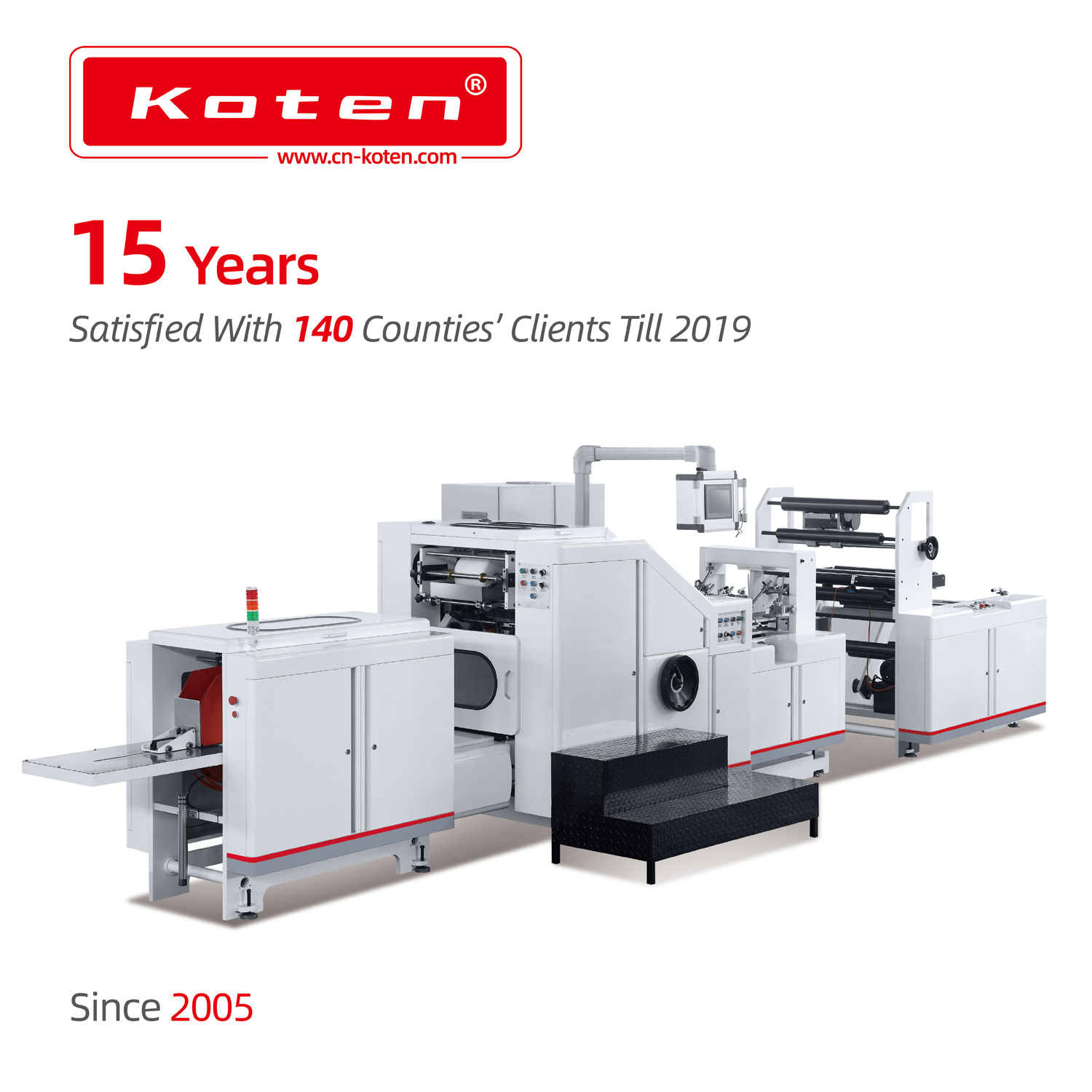
Beyond physical dimensions, the density and thickness of the raw material play a critical role in dictating the operational pace. Grams per Square Meter, commonly known as GSM, is the standard metric for paper weight. The handling characteristics of the machinery must be perfectly calibrated to the specific substrate being processed.
In the packaging sector, materials typically range from lightweight 40 GSM sheets used for pharmacy bags up to heavy 170 GSM boards used for premium luxury retail carriers. The interplay between this thickness and the mechanical force of the machine requires precise engineering.
Lightweight substrates between 40 and 70 GSM allow the production line to operate at peak mechanical speeds. Because the material is thin, it folds effortlessly and requires very little compression force to seal the glued bottom. However, running thin paper at high velocities introduces a distinct challenge regarding web tension management. Thin fibers possess lower tensile strength. They are highly susceptible to tearing, wrinkling, or jamming if the tension is not perfectly equalized. Advanced edge-positioning control systems and highly responsive tension controllers are absolutely mandatory to prevent catastrophic web breaks.
When processing thick materials between 100 and 170 GSM, manufacturers must rely on heavy-duty kraft paper bag equipment. Heavyweight paper possesses high stiffness and resistance to bending. To create sharp creases without fracturing the paper fibers, the mechanical modules must apply greater force over a slightly prolonged duration.
Specifically, heavy paper demands a slower operational speed to accommodate the adhesive process. Water-based cold glues need adequate time to penetrate the dense, tightly woven fibers of heavyweight kraft. Imagine an operator trying to push 130 GSM paper at 350 bags per minute. The bag would be ejected before the glue has sufficiently tacked. This results in bottom failure the moment a consumer loads the bag. Therefore, while heavyweight carriers command a higher market premium, they inherently yield a lower volumetric output per hour.
A frequent pitfall in equipment procurement is equating the manufacturer's maximum rated speed with the actual daily capacity. Understanding the nuance between theoretical limits and practical realities is vital for accurate supply chain planning.
Theoretical speed is the absolute maximum mechanical cycle rate the equipment can achieve under perfect conditions with the smallest bag size and optimal paper weight. Practical speed is the sustainable operational rate in a real-world factory environment. It accounts for the laws of physics, material limitations, and necessary quality control measures. An engineer might throttle a unit rated for 400 bags per minute down to 320 bags per minute. This ensures zero defect rates and minimizes wear and tear on the servos and bearings.
Several operational realities force floor managers to throttle speeds below the theoretical maximum. First, the speed of the line can never exceed the curing rate of the adhesive used. Environmental factors like factory humidity and temperature drastically affect this curing time. Second, integrating inline flexographic printing units directly into the web feed generally requires a speed reduction. This maintains print registration accuracy and allows ink drying time. Finally, pushing machinery to maximum capacity accelerates component wear, inevitably leading to more frequent maintenance stops.
To accurately project capacity, procurement teams should utilize the Overall Equipment Effectiveness framework. True daily yield is not simply a multiplication of speed and time. The formula must include an availability factor that accounts for roll changes, glue refills, and minor jams. If a line runs at 300 bags per minute for a 480-minute shift with an availability factor of 85 percent, the practical yield calculation is 300 multiplied by 480 multiplied by 0.85, equaling 122,400 bags per shift. Ignoring this availability factor leads to severe overestimations.
Capacity optimization is not about maximizing a single metric. It is about finding the perfect equilibrium between bag size, paper weight, and mechanical speed. These three variables form an interdependent triangle. Altering one immediately impacts the other two.
To help technical directors visualize this mechanical trade-off, we have compiled a standard operational matrix based on typical factory floor data.
| Application Type | Typical Bag Width | Paper Weight Range | Practical Output Speed | Primary Mechanical Challenge |
|---|---|---|---|---|
| Fast Food / Bakery | 80mm - 150mm | 40 - 70 GSM | 300 - 400+ BPM | Web tension control at high speeds |
| Standard Grocery | 150mm - 250mm | 70 - 100 GSM | 200 - 300 BPM | Adhesive curing time and folding accuracy |
| Luxury Retail / Apparel | 250mm - 450mm+ | 100 - 170 GSM | 130 - 200 BPM | Creasing thick fibers without cracking |
You cannot force incompatible variables together. Running a large, heavy kraft carrier at the maximum speed engineered for a small bakery pouch leads to high defect rates, severe machine jams, and extensive downtime. The optimal setup is the exact calibration where the equipment produces the highest volume of sellable, defect-free units per shift. Reducing speed by 10 percent might decrease theoretical hourly output. However, if it slashes paper jams and scrap rates by half, the actual net yield at the end of the day will be significantly higher.
For packaging manufacturers, the ability to diversify product offerings is a critical driver of revenue growth. Investing in versatile machinery allows businesses to capture multiple market segments, provided they understand the distinct mechanical requirements for different categories.
The food and beverage sector demands high-volume, cost-effective solutions with strict hygiene standards. Production focuses on processing lightweight materials such as greaseproof or PE-coated paper at maximum mechanical speeds. Because these items are generally smaller, the feeding and folding mechanisms operate at accelerated cycles. The equipment must be configured for rapid web tension adjustments. This handles slick, lightweight materials without slipping. It also requires utilizing food-grade adhesives and stainless steel contact points to prevent contamination.
Transitioning to the retail sector introduces entirely different mechanical challenges. A dedicated shopping bag machine is essential when producing luxury retail bags or heavy-duty grocery totes involving larger widths and deeper bottom gussets. The folding mechanisms must apply greater torque to crease thick paper accurately. Additionally, retail bags frequently require the integration of inline handle-pasting units. Whether applying twisted paper loops or flat paper handles, the synchronization between the handle-making module and the main bag-forming tube adds a layer of mechanical complexity. This naturally reduces the overall output rate.
Procurement managers and technical directors must evaluate equipment beyond baseline speed claims. Selecting the right machinery requires a comprehensive analysis of build quality, technological integration, and long-term operational reliability.
The foundational build of an automatic bag machine directly impacts its practical capacity. Machinery constructed with solid cast-iron frames absorbs the intense kinetic energy generated during high-speed operations. Inferior, lighter frames vibrate excessively at peak speeds. This leads to micro-misalignments in the paper web and inconsistent glue application.
Furthermore, modern packaging efficiency is heavily reliant on automation. Look for systems equipped with advanced Programmable Logic Controllers and multi-axis servo motors. A user-friendly touchscreen interface allows operators to input dimensions digitally. The system automatically adjusts the draw length, cutting speed, and web tension. This digital precision drastically reduces changeover downtime and minimizes material waste during calibration.
To truly master production capacity, facility managers must look beyond theoretical output and focus relentlessly on Overall Equipment Effectiveness. This metric provides a holistic view of manufacturing productivity by factoring in Availability, Performance, and Quality.
Downtime is the ultimate enemy of capacity. Advanced roll-fed systems inherently boost availability by drawing continuously from a jumbo paper roll. Operators spend significantly less time loading raw materials. Features like automatic web-alignment and hydraulic lifting unwinding stands allow a single operator to load multi-ton rolls safely and swiftly. This keeps the line running with minimal interruption.
Performance refers to the equipment's ability to run consistently at its configured speed without micro-stops. Quality refers to the yield of saleable units versus rejected waste. Investing in high-tier equipment ensures that mechanical components maintain exact tolerances over millions of cycles. Regular preventative maintenance is essential. Flushing glue nozzles and calibrating servo drives keeps the OEE above industry benchmarks. This ensures that theoretical capacity translates into actual, profitable yield.
Maximizing the output of a Square Bottom Paper Bag Making Machine is not as simple as turning a dial to the fastest setting. It requires a strategic, nuanced balance of bag size, material thickness, and mechanical speed. By understanding the physical limitations and interplay of these variables, packaging facilities can optimize their operations, reduce scrap rates, and significantly increase their daily yield of sellable products.
Investing in versatile, high-quality manufacturing equipment empowers your business to seamlessly pivot between high-speed food packaging and heavy-duty retail carriers. Carefully evaluate your specific production goals, prioritize robust build quality and automation, and consult with industry experts to configure a setup that perfectly aligns with your market demands. For customized solutions tailored to your specific production parameters, explore the advanced machinery options at Koten to future-proof your packaging facility.
The maximum speed is not a static number. It is highly dependent on the physical dimensions of the product and the thickness of the material. Standard models typically operate within a range of 150 to over 400 bags per minute. Small, lightweight pouches can be processed at the upper end of this spectrum. Large retail carriers with wide gussets require more processing time per cycle, bringing the operational speed closer to 130 to 200 bags per minute.
Yes, but only within the specific minimum and maximum parameters engineered into that particular model. Every unit has a defined range for tube width, bottom width, and cut length. While a mid-range setup can handle both medium food bags and small retail carriers, it cannot produce extreme opposites. A dedicated high-speed machine is required for micro-sized fast-food pouches, just as specialized heavy-duty equipment is necessary for oversized retail totes.
Standard equipment is typically calibrated to handle weights between 60 and 150 GSM. If your product line requires heavy-duty luxury bags utilizing material thicker than 150 GSM, standard folding mechanics will likely cause the stiff fibers to crack or misfold. For heavyweight applications, you must procure specialized equipment featuring heavy-duty pressing units, specialized scoring wheels, and prolonged compression sections to ensure the adhesive penetrates properly.
The duration of a size changeover depends entirely on the machinery's level of automation and the scope of the change. On modern servo-driven models, changing the length is a digital process completed via the touchscreen in seconds. However, changing the width or bottom size requires the mechanical replacement of forming plates and the physical realignment of folding guides. This mechanical changeover typically takes a skilled operator between 30 minutes to two hours.
Yes, integrating an inline handle-pasting unit will generally reduce the maximum bags-per-minute output. Handle integration introduces a complex, multi-step mechanical sequence involving forming the handle, applying hot-melt adhesive, and pressing it precisely onto the moving web. To ensure accurate placement and secure adhesion, the main bag-forming module must operate at a slightly reduced speed to synchronize perfectly with the handle-making unit.
V-bottom machines produce flat or pinch-bottom bags commonly used for lightweight bakery items or french fries. These machines have simpler folding mechanisms and can run at extremely high speeds, often exceeding 600 bags per minute. Square bottom machines create a flat, rectangular base that allows the bag to stand upright. This requires complex bottom-opening, gluing, and folding drums, which naturally results in a lower maximum speed compared to V-bottom variants but offers a much higher load-bearing capacity.
Maintaining optimal speed requires a strict preventative maintenance schedule. Operators must clean the cold glue and hot melt adhesive tanks daily to prevent nozzle blockages, which cause immediate downtime. Additionally, routine lubrication of the mechanical transmission gears and regular calibration of the web-tension sensors and EPC systems are critical. Keeping the pneumatic and servo systems perfectly tuned prevents the micro-misalignments that force engineers to throttle down machine speeds.


