Views: 0 Author: Site Editor Publish Time: 2026-03-18 Origin: Site
Price is often the first thing buyers compare when evaluating machinery, but experienced manufacturers know that the real cost of production lies elsewhere. Downtime, unstable output, excessive labor, and frequent machine adjustments can quickly turn a low initial investment into an expensive long-term problem. For companies planning to produce school notebooks at scale, understanding Exercise Book Making Solutions from a broader operational perspective is far more important than focusing on price alone. The right production system should support reliable workflow, consistent product quality, manageable labor requirements, and long-term production growth. When manufacturers look beyond basic machine specifications and examine how a complete solution performs in real production conditions, they gain a clearer understanding of what truly matters before making an investment.
Production capacity is one of the most critical considerations when evaluating an exercise book manufacturing system. Manufacturers must determine how many books their factory needs to produce each day under normal operating conditions. However, daily averages do not always reflect real market demand.
Exercise book demand often fluctuates depending on school enrollment periods, regional academic calendars, and seasonal supply cycles. During peak seasons, factories may need to produce significantly higher volumes than usual. A production line that works comfortably under normal conditions might struggle when demand suddenly increases.
When evaluating machinery, it is important to consider both everyday production requirements and peak capacity expectations. Equipment should be able to operate efficiently across these conditions without compromising product quality or machine stability.
While insufficient capacity can slow production and delay deliveries, excessive capacity can also create operational challenges. Purchasing equipment designed for much higher output than current demand may result in unnecessary investment costs and increased maintenance requirements.
A well-planned production system balances current production needs with future growth potential. Instead of focusing solely on maximum machine speed, manufacturers should examine how equipment fits their actual order volume and production schedule.
Another factor that influences production capacity is the structure of incoming orders. Some manufacturers produce large quantities of standardized exercise books, while others supply a variety of notebook formats in smaller batches.
Production speed should align with the type of orders a factory receives. High-speed continuous lines are ideal for large-volume production, while more flexible systems may be better suited for factories that frequently change product specifications.
Exercise books come in a wide range of sizes and page counts depending on regional educational standards. Common formats include A4, A5, and smaller school notebook sizes with page counts ranging from a few dozen sheets to thicker writing books.
Equipment must be capable of handling these variations without compromising efficiency. A production line designed for only one format may struggle when customers request alternative sizes or page counts.
Ensuring that machinery supports the desired range of products helps manufacturers remain adaptable to changing market requirements.
Wire stitching remains one of the most widely used binding methods for exercise books because it offers durability, cost efficiency, and compatibility with high-speed production. However, not all notebook production systems are designed specifically for wire-stitched formats.
Machines that are optimized for this binding method ensure accurate alignment, stable stitching, and reliable folding. These capabilities directly influence the durability and appearance of the finished notebook.
When evaluating production systems, manufacturers should confirm that the equipment is designed for the specific binding format used in their product line.
Markets evolve over time, and many manufacturers eventually expand their product range beyond basic exercise books. New notebook formats, page counts, or cover designs may require adjustments in production workflow.
Equipment that supports these adjustments provides long-term flexibility. A well-designed system allows manufacturers to introduce new products without needing to replace the entire production line.
Automation has become a key factor in modern notebook manufacturing. Automatic exercise book production lines reduce the need for manual material handling and repetitive operations.
By integrating feeding, stitching, folding, trimming, and stacking processes, automated systems allow materials to move continuously through the production line. This reduces interruptions and helps maintain consistent production rhythm.
Fewer manual steps also reduce the likelihood of human error, improving overall product quality.
While fully automated systems provide high productivity, semi automatic setups still play an important role in many factories. These systems involve separate machines for different stages of production, allowing operators to manage each step independently.
This configuration can be beneficial for manufacturers producing smaller batches or multiple notebook formats. Semi automatic workshops offer flexibility that allows operators to adjust production more easily when switching between product specifications.
Labor availability and cost vary significantly across regions. In some manufacturing environments, reducing manual labor is a major priority, while in others, flexibility in production workflow may be more valuable.
Automation level directly influences labor structure. Integrated production systems can operate with fewer operators overseeing the entire workflow, while semi automatic setups require more personnel to manage individual machines.
Understanding this relationship helps manufacturers estimate long-term operating costs more accurately.
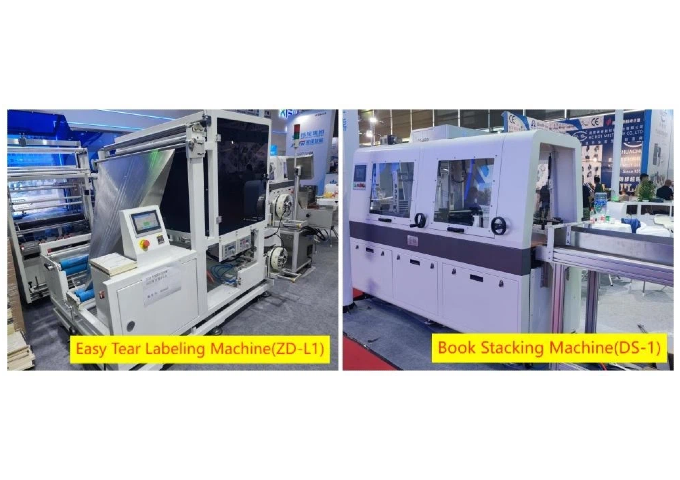
Exercise books must contain the correct number of pages and maintain proper alignment throughout the entire notebook. Errors in page counting can lead to defective products that cannot be sold.
Modern production systems include automated counting mechanisms that ensure each book receives the correct number of sheets before stitching. This improves production reliability and reduces material waste.
The stitching stage plays a critical role in notebook durability. If stitching points are misaligned or inconsistent, the notebook spine may weaken or appear uneven.
High-quality production systems maintain precise control over stitching placement and folding accuracy. Consistent binding ensures that exercise books remain durable even with frequent classroom use.
The finishing stage determines the final appearance of the notebook. Trimming equipment must produce clean, uniform edges that give the book a professional look.
Accurate trimming also improves stacking and packaging efficiency, allowing finished notebooks to be packed neatly for distribution.
Every production system contains components that experience regular wear during operation. These parts must be accessible for inspection and replacement.
Machines designed with accessible service points make routine maintenance faster and more convenient. When technicians can reach key components easily, factories experience less downtime.
Even advanced machinery requires skilled operators who understand how to maintain stable production conditions. Proper training ensures that operators can monitor machine performance, detect potential issues, and maintain efficient workflow.
Daily maintenance routines such as cleaning paper dust and checking moving components help prevent unexpected equipment failures.
Complex maintenance procedures can slow production and increase operational risk. Equipment designed with straightforward maintenance systems helps factories maintain consistent uptime.
Simplified maintenance processes reduce the time required for inspections and repairs, allowing production to continue with minimal interruptions.
Many notebook manufacturers supply multiple exercise book formats. Changing between different sizes requires machine adjustments that affect production speed.
Equipment designed for efficient changeovers allows factories to switch between product types quickly without extended downtime.
Factories that produce notebooks for distributors or wholesalers often receive orders for different products simultaneously. Flexible production systems can manage these batches more effectively.
This flexibility helps manufacturers respond to changing customer demands while maintaining stable output.
While high-speed production lines are valuable for standardized products, flexibility can be equally important for manufacturers serving diverse markets. Equipment that balances speed with adaptability allows factories to operate efficiently across multiple product categories.
Manufacturers often begin with a clear understanding of their current production requirements. However, successful factories rarely remain at the same scale for long.
Production systems should support current operations while allowing room for expansion.
Poorly planned equipment investments can create bottlenecks when production volume increases. Machines that cannot keep up with demand may slow the entire workflow.
Integrated production systems reduce this risk by ensuring that each stage of the process is balanced and capable of supporting higher output.
Buying machines individually without considering the entire production workflow often leads to inefficiencies. A coordinated production solution ensures that every machine stage works together smoothly.
This approach improves productivity and reduces operational complexity over time.
Factor | Why It Matters | Questions to Ask | Risk If Ignored |
Production capacity | Determines daily output potential | Can the system meet peak demand? | Delayed deliveries |
Product compatibility | Ensures machines support required formats | Does the line handle different sizes? | Limited product range |
Automation level | Influences labor efficiency | How many operators are required? | High labor cost |
Quality control systems | Protects product consistency | Are counting and stitching precise? | Defective notebooks |
Maintenance design | Supports long-term operation | Are service points accessible? | Increased downtime |
Evaluating notebook production systems requires a deeper perspective than comparing machine prices or speed ratings. The most reliable exercise book production solutions are those that support stable workflow, consistent quality, manageable labor requirements, and long-term scalability. When manufacturers focus on these factors during the investment stage, they create production environments that remain efficient and competitive as demand grows.
Koten Machinery has specialized in printing and packaging machinery manufacturing since 2005, delivering integrated solutions for book production, post-press equipment, and paper converting systems. Our exercise book production lines are designed to support stable workflow, efficient output, and long-term operational reliability.
If you are planning to invest in new notebook manufacturing equipment or expand your existing production capacity, contact Koten Machinery to learn how our exercise book production solutions can support your business development.
Manufacturers should evaluate production capacity, product compatibility, automation level, quality control systems, and maintenance requirements before selecting equipment.
Automated systems reduce manual material handling, improve workflow consistency, and allow factories to maintain higher production output.
Yes. Many systems are designed to support multiple notebook sizes and page counts, allowing manufacturers to produce various formats within one production environment.
Proper planning ensures that equipment supports both current demand and future growth, preventing production bottlenecks and maintaining stable output.


