
Views: 0 Author: Site Editor Publish Time: 2026-10-18 Origin: Site
Where can sustainable packaging create new business opportunities? Growing demand across retail, food service, and grocery markets opens new possibilities. A Paper Bag Making Machine supports efficient production of customized, eco-conscious packaging. In this article, discover key market opportunities, equipment features, and practical strategies for expanding paper bag production.
Paper packaging opportunities extend across several industries. Each market has different requirements for bag strength, appearance, and materials. Manufacturers can enter these markets by matching equipment capabilities to customer needs.
Bakeries and cafés use paper bags for bread, pastries, sandwiches, and snacks. These products often require compact packaging and convenient handling.
A paper bag making machine for food packaging can produce suitable bakery bag formats. Flat-bottom and V-bottom designs support different food packaging applications.
Some specialized machines also offer window-patching functions for product visibility. Manufacturers must verify food-contact suitability and window material compatibility before production.
Fashion retailers and boutiques use paper shopping bags to support branded product presentation. Printed logos, custom dimensions, and decorative finishes create additional manufacturing opportunities.
Square-bottom paper bags offer stable structures and practical carrying capacity. Suitable handle configurations improve convenience for shoppers.
An automatic paper bag making machine supports repeated production of consistent retail bags. Manufacturers can supply customized packaging to fashion brands and retail distributors.
Grocery stores require practical bags for packaged food, produce, and everyday shopping. Suitable bag strength is essential for reliable transportation.
A kraft paper bag making machine helps manufacturers produce packaging using compatible paper grades. Square-bottom designs provide convenient loading and stable bases.
Manufacturers should select paper specifications according to expected carrying loads. Bottom construction and adhesive strength also require testing.
Restaurants and takeaway businesses need packaging for meals, snacks, and packaged products. Paper bags provide practical carrying options for selected food service applications.
A paper bag making machine for takeaway packaging supports different bag dimensions and customer branding requirements. Square-bottom bags are useful for carrying packaged food containers.
Secure bottom bonding and suitable handles improve practical performance. Manufacturers can develop recurring supply relationships with restaurant chains and food distributors.
Gift shops and promotional suppliers use paper bags for branded campaigns and product presentation. Different printing designs and handle styles create opportunities for customization.
Packaging manufacturers can offer multiple paper grades, dimensions, and decorative finishes. However, specialty materials may require additional equipment adjustments.
Shorter promotional orders also demand efficient changeovers. Flexible production planning helps manufacturers serve customers with different packaging designs.
Selected agricultural and food products require specialized paper packaging. Examples include dry produce, bakery products, and certain packaged agricultural goods.
Material strength and moisture exposure determine suitable bag construction. Some applications require grease-resistant paper or additional protective barriers.
Manufacturers should confirm product weight and storage conditions before selecting materials. Direct food-contact applications also require appropriate compliance documentation.
Packaging converters can serve multiple industries through private-label production. Customers may request different bag sizes, printed branding, and handle configurations.
Flexible equipment helps manufacturers accommodate these requirements. Consistent dimensions and stable bonding support reliable recurring orders.
Private-label packaging also creates opportunities for long-term manufacturing partnerships. Clear product specifications and quality standards help maintain customer confidence.
Tip: Manufacturers should prioritize packaging markets that match their existing bag formats, material capabilities, and production capacity.
Paper bag manufacturing converts suitable paper materials into functional packaging products. Automated equipment coordinates several production stages to improve consistency. These capabilities help manufacturers serve commercial packaging markets.
Production typically begins with suitable kraft paper rolls. The selected material must match the intended bag dimensions and carrying requirements.
Paper strength, surface properties, and basis weight influence finished performance. Different applications may require different paper specifications.
A paper bag making machine processes these materials into consistent packaging formats. Accurate feeding and forming help maintain reliable bag dimensions.
Automatic production combines several operations into a coordinated manufacturing process. Paper feeding begins the sequence before cutting, folding, and gluing.
The machine then forms the bag structure and prepares completed products for collection. The exact sequence depends on the bag design.
Rokin's fully automatic paper bag equipment illustrates this integrated approach. Its manufacturer describes combined feeding, gluing, folding, and forming operations.
Paper bags are available in several structural formats. Flat or V-bottom bags commonly serve bakery and selected food packaging applications.
Square-bottom bags provide stable bases for grocery and retail products. Handle configurations may include twisted paper handles or flat paper handles.
Not every machine supports every bag design. Manufacturers should confirm whether handle-making equipment is integrated or optional.
Inaccurate cutting or folding can create unusable bags. Poor adhesive application may also produce weak seams or unstable bottoms.
Controlled paper feeding helps maintain consistent material positioning. Suitable machine settings reduce repeated manufacturing errors.
Manufacturers should inspect finished bags throughout production. Early defect detection helps reduce unnecessary paper consumption and rework.
Equipment flexibility influences which packaging applications manufacturers can serve. Adjustable dimensions, reliable feeding, and suitable automation help support different customer requirements.
Packaging customers require different bag widths, lengths, and bottom dimensions. Manufacturers must select equipment supporting their intended product range.
Material compatibility is equally important. Paper weight and surface properties affect feeding, folding, and adhesive performance.
Some automatic machines support several bag configurations through adjustable settings. Buyers should verify actual operating ranges before placing orders.
Large packaging orders require stable production capacity. Automatic feeding and forming can reduce repeated manual operations.
Integrated counting and collection systems simplify downstream packing. However, maximum rated speed does not guarantee equivalent accepted output.
Manufacturers should measure production using actual bag designs and materials. Changeovers, inspections, and material quality also influence practical throughput.
Windowed bakery bags allow customers to view selected packaged products. This feature can support product presentation when suitable window materials are used.
Handle-making systems create additional opportunities in retail shopping and takeaway packaging. Twisted and flat handles serve different carrying requirements.
These capabilities depend on machine configuration. Manufacturers should confirm whether the required functions are included or need separate equipment.
Programmable controls support repeatable production settings. They can simplify adjustments when manufacturers process recurring bag formats.
Photoelectric sensors help monitor material positioning in suitable machine designs. Stable feeding supports consistent cutting lengths and bag dimensions.
Regular calibration remains necessary for reliable performance. Operators should inspect sample bags after changing materials or machine settings.
Tip: Machine speed, supported bag dimensions, and handle-making capabilities vary by model and configuration.
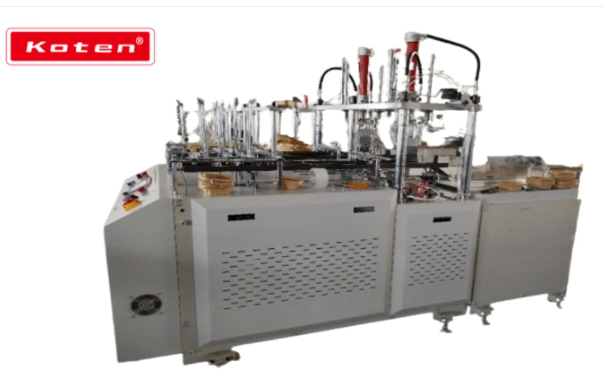
Successful market expansion starts with selecting equipment for specific packaging requirements. Manufacturers should compare bag structures, material specifications, and expected production volumes.
Bakery businesses commonly use handle-free paper bags for bread and pastries. Flat or V-bottom designs suit different product dimensions.
Some machines support optional window-patching applications. These designs can improve product visibility while maintaining convenient packaging.
However, packaging materials must match food-contact requirements. Manufacturers should also verify grease resistance when handling suitable food products.
Square-bottom paper bag making machines produce packaging with stable bases. This construction supports grocery shopping, retail products, and takeaway applications.
Bottom dimensions influence carrying capacity and product placement. Paper strength and adhesive performance also determine practical durability.
Manufacturers should test completed bags under representative loading conditions. Suitable material selection helps reduce failures during everyday handling.
Handle-free machines are practical for selected bakery and food packaging products. They can offer simpler production arrangements for standard bag formats.
Handle-making systems support shopping bags and takeaway packaging requiring convenient carrying. However, they introduce additional materials and processing requirements.
Rokin offers fully automatic configurations integrating twisted or flat handle production. Its equipment combines paper feeding, handle attachment, bag forming, and collection.
Production capacity should reflect actual customer demand. Manufacturers need to consider order quantities, operating shifts, and product changeovers.
Different bag dimensions may affect achievable machine speed. Material characteristics can also influence stable production.
Equipment trials should use representative bag designs and paper grades. Buyers should compare accepted output rather than advertised maximum speed.
Packaging Application | Suitable Bag Format | Important Equipment Features |
|---|---|---|
Bakery packaging | Flat or V-bottom bags | Material compatibility, optional windows |
Grocery packaging | Square-bottom bags | Strong bottom forming, suitable paper weight |
Retail shopping | Square-bottom bags with handles | Handle attachment, printing compatibility |
Takeaway packaging | Square-bottom paper bags | Secure gluing, practical carrying capacity |
Gift packaging | Customized paper bags | Flexible dimensions, decorative materials |
Promotional packaging | Printed shopping bags | Accurate feeding, repeatable forming |
Tip: Request sample production using actual customer materials before investing in specialized paper bag equipment.
Automation can improve manufacturing consistency and reduce repeated manual operations. However, conventional and semi-automatic systems remain suitable for some businesses. Equipment selection should reflect production requirements.
Fully automatic production systems coordinate feeding, folding, gluing, and collection. These processes reduce manual handling between manufacturing stages.
Semi-automatic systems may require operators to complete additional positioning or transfer tasks. This increases labor involvement during production.
However, automation benefits depend on operating conditions and order quantities. Manufacturers should calculate actual productivity across complete production shifts.
Consistent dimensions are important for commercial paper packaging. Incorrect folding or cutting can create uneven bag structures.
Automatic controls support repeated processing settings and stable positioning. This helps reduce variations during recurring orders.
Nevertheless, finished quality still depends on paper characteristics and maintenance. Operators must inspect adhesive bonding and completed bag dimensions regularly.
Paper represents a major material expense in bag manufacturing. Cutting mistakes and defective seams increase production waste.
Automatic processing can reduce certain manufacturing errors through controlled settings. However, electricity, maintenance, and equipment depreciation also affect costs.
Manufacturers should evaluate expenses per acceptable finished bag. This provides a more useful comparison than machine purchase prices alone.
Fully automatic equipment is often suitable for large recurring orders. It supports coordinated operations and reduced repetitive handling.
Semi-automatic systems may suit smaller manufacturers producing varied packaging formats. Their flexibility depends on the available equipment.
Comparison Factor | Semi-Automatic Production | Fully Automatic Production |
|---|---|---|
Initial investment | Generally lower | Generally higher |
Manual handling | More operator involvement | Reduced repetitive handling |
Production capacity | Often suitable for smaller batches | Often suitable for larger orders |
Bag consistency | Depends more on operator setup | Supports automated repeatability |
Changeover requirements | Model-dependent | Model-dependent |
Maintenance | Often simpler | May require specialized support |
Typical application | Smaller, varied orders | Recurring commercial orders |
Manufacturers should compare output, material waste, maintenance, and labor before choosing an automation level.
Paper packaging provides opportunities for manufacturers serving environmentally conscious markets. However, material selection and product performance require careful evaluation. Sustainability claims must also reflect actual material characteristics.
Different kraft paper grades offer different strength and processing characteristics. Manufacturers should select materials according to intended bag applications.
Grocery bags require suitable carrying strength, while bakery packaging may prioritize different properties. Surface treatment can also influence printing and adhesive bonding.
Recycled content and responsible sourcing should be verified through supplier documentation. Material selection must support both packaging performance and environmental objectives.
Bag durability depends on paper strength and construction quality. Weak bottom seams may cause failures during carrying.
Manufacturers should control adhesive application and verify suitable bonding conditions. Handle attachment also requires testing when applicable.
Completed bags should undergo practical loading tests. These checks help confirm suitability for expected product weights.
Paper can lose strength when exposed to moisture. Grease and liquid contact may also affect packaging performance.
Some applications require treated paper or protective barriers. However, additional coatings can change recycling and disposal characteristics.
Manufacturers must verify applicable food-contact requirements before supplying direct-contact packaging. Paper-based construction alone does not establish food safety compliance.
Common manufacturing defects include uneven folding, inaccurate cutting, and weak adhesive seams. These problems increase rejected output and operating costs.
Regular calibration helps maintain stable equipment performance. Operators should inspect paper feeding, cutting alignment, and gluing conditions.
Preventive maintenance also reduces unexpected machine interruptions. Quality records help manufacturers identify recurring defects and improve production settings.
Tip: Paper packaging is not automatically recyclable, compostable, or environmentally preferable in every application.
Market expansion requires more than purchasing production equipment. Manufacturers must identify suitable customers, develop practical products, and maintain reliable supply capabilities.
Packaging manufacturers should research customer requirements across several industries. Bakeries, retailers, grocery businesses, and restaurants have different packaging needs.
Bag dimensions, carrying strength, printing, and material properties influence purchasing decisions. Understanding these requirements helps manufacturers select suitable products.
Businesses should prioritize applications matching existing equipment capabilities. This reduces unnecessary investment and improves production planning.
Offering different packaging formats helps manufacturers serve more customer categories. Custom dimensions, printed branding, and handle options create additional product opportunities.
However, each new design requires compatible machinery and materials. Manufacturers should verify achievable dimensions and processing requirements.
KOTEN Machinery provides Paper Box Solutions for companies expanding beyond paper bags. This category includes carton forming, die-cutting, window patching, and gluing equipment. These are related paper packaging processes, not paper bag manufacturing operations.
Commercial packaging buyers value consistent quality and reliable delivery. Manufacturers should maintain clear product specifications and inspection procedures.
Recurring customers may require stable dimensions, printing quality, and carrying performance. Reliable manufacturing helps support these expectations.
Long-term supply relationships also create opportunities for additional packaging products. Manufacturers can expand offerings when their equipment and production resources allow.
New packaging markets should be evaluated using realistic production economics. Material costs, labor, equipment maintenance, and rejected products influence profitability.
Manufacturers should also consider minimum order quantities and changeover frequency. Small customized orders may require different pricing structures.
A practical assessment compares expected selling prices against complete production costs. Market expansion becomes more manageable when manufacturers understand these operating requirements.
Tip: Evaluate each new packaging application using expected order volume, material cost, and acceptable production yield.
Selecting suitable equipment requires evaluating product specifications and actual manufacturing needs. Buyers should confirm machine capabilities before committing to new packaging markets.
Equipment selection should begin with the intended bag structure. Flat-bottom and square-bottom bags require different forming arrangements.
Buyers must confirm supported dimensions, paper weights, and handle configurations. They should also verify compatibility with printed or treated materials.
Sample production provides valuable evidence of actual machine capabilities. It helps identify potential limitations before equipment installation.
Production speed influences how many commercial orders manufacturers can complete. However, maximum machine speed does not guarantee acceptable finished output.
Automatic feeding, accurate cutting, and reliable gluing support consistent production. PLC controls and suitable sensing systems also improve process coordination.
Manufacturers should request demonstrations under representative operating conditions. Inspection results should be included when comparing production capacity.
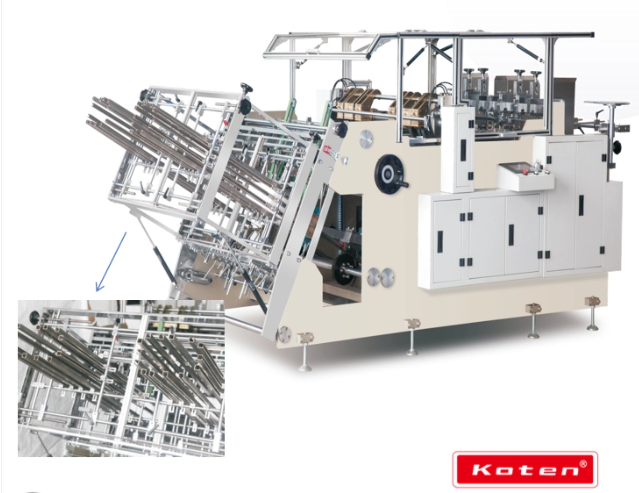
Machine dimensions influence factory planning and material movement. Buyers should confirm installation space, operator access, and maintenance clearance.
Paper roll handling and finished bag collection also require suitable arrangements. Efficient layouts reduce unnecessary material transfers.
For manufacturers considering adjacent paper packaging markets, KOTEN offers specialized carton equipment. Its Automatic Double Head Paper Carton Erecting Forming Machine produces food cartons and takeaway containers. Model HB-1400PLUS includes vacuum feeding, automatic gluing, and PLC-based controls.
KOTEN also supplies the Double Head Automatic Octagonal Paper Box Forming Machine. Model KT-T2 produces octagonal paper food containers through dual-channel forming operations. These machines support paper carton production rather than paper bag making.
Equipment investment includes more than the initial purchase price. Maintenance, operator training, energy use, and replacement parts influence operating costs.
Supplier assistance can support installation and production preparation. Buyers should confirm available services and technical documentation before purchasing.
KOTEN's Automatic Dual-unit Hot-stamping and Die-cutting Machine provides another related paper packaging capability. Model KT HDW105 integrates hot stamping, die-cutting, and waste stripping for suitable paperboard materials. It supports carton finishing applications rather than replacing dedicated bag-making machinery.
Tip: Buyers should distinguish paper bag machines from carton forming and finishing equipment when planning factory expansion.
A Paper Bag Making Machine creates new opportunities in retail, bakery, grocery, and takeaway packaging. Automated production improves efficiency, reduces waste, and supports customized paper bags. Suitable materials, reliable equipment, and consistent quality control help manufacturers meet changing packaging demands. These factors also support sustainable business growth. KOTEN Machinery offers paper packaging and converting equipment, including carton forming and finishing machines. Its solutions help manufacturers expand production capabilities and explore new packaging markets.
A: A Paper Bag Making Machine produces bags through automated folding and gluing.
A: A Paper Bag Making Machine processes suitable paper into reusable or recyclable packaging designs.
A: An automatic Paper Bag Making Machine improves efficiency and reduces manual handling.
A: Retail, bakery, grocery, and takeaway businesses need customized packaging.
A: Prices depend on automation, capacity, and optional features.
A: Weak glue, unsuitable paper, or incorrect settings cause defects.


