
Views: 0 Author: Site Editor Publish Time: 2026-07-22 Origin: Site
Mismatched packaging in high-volume manufacturing creates hidden operational costs that rapidly erode profit margins. Machine downtime, product damage, and inflated freight costs often stem from poorly specified materials rather than equipment failure. Balancing material durability, structural design, and operational efficiency while ensuring seamless integration with existing factory automation is a daily challenge for plant managers.
Selecting the correct Paper Box Solutions requires a systematic evaluation framework. You must assess materials based on science, machine compatibility, and overall operational impact. A slight variation in board caliper or grain direction can cause severe feed jams on high-speed lines, bringing production to a halt. This guide provides actionable steps to align your packaging specifications with your factory floor requirements, ensuring maximum throughput and minimal waste.
Material selection must be dictated by both product protection requirements and the specific tolerances of your automated packaging lines.
Integrating an Automatic Paper Box Machine requires precise alignment with paperboard caliper, grain direction, and surface finishes to prevent feed jams.
Overall expenditure extends beyond the per-unit cost of the box, encompassing storage footprint, freight efficiency, and defect rates.
Vetting a corrugated box manufacturer requires auditing their quality control protocols, specifically Edge Crush Test (ECT) and Box Compression Test (BCT) consistency.
Daily production volumes directly dictate the structural complexity of your packaging. High-volume runs demand simplified box structures that erect quickly and reliably. Complex folds or multi-part inserts slow down assembly and increase the risk of line stoppages. You must match the box design to the speed capabilities of your production line. If your line runs at 120 cartons per minute, a complex tuck-top design might cause unacceptable bottlenecking compared to a standard glued auto-bottom.
Factory throughput speeds correlate directly with the required assembly mechanisms. A crash-lock base allows for rapid, automated erecting, making it ideal for high-speed operations. Standard slotted containers require more time to fold and tape. Supplier lead times also impact inventory holding costs and just-in-time manufacturing models. Long lead times force you to hold excessive inventory, tying up capital and occupying valuable warehouse space. You need suppliers who can deliver within tight windows to keep your floor clear of excess pallets.
Industry-standard structural configurations serve different operational needs. You must evaluate these based on your specific erecting equipment and labor availability.
| Box Style | Assembly Method | Factory Floor Application | Runnability on Automated Lines |
|---|---|---|---|
| Regular Slotted Carton (RSC) | Automated taping/gluing | Standard shipping, high-volume transit | Excellent. Highly efficient with minimal waste. |
| Full Overlap Slotted (FOL) | Automated or manual | Heavy industrial parts, high impact risk | Good, but requires specific flap-folding plows. |
| Roll End Tuck Top (RETT) | Manual or specialized erector | E-commerce, premium unboxing | Poor on standard lines. Prone to tab jams. |
| Crash-Lock Auto Bottom | Automated erecting | Fast-moving consumer goods (FMCG) | Superior. Designed specifically for high-speed erecting. |
Auto-bottom structures significantly reduce assembly time. When evaluating these styles, analyze the labor cost and cycle-time trade-offs. Manual folding is labor-intensive and prone to human error, increasing cycle times. Automated erecting on high-speed lines requires precise box structures but drastically lowers per-unit labor costs and increases overall output.
Identifying primary transit hazards is critical for specifying the right materials. Vibration during transit causes abrasion, moisture weakens paperboard integrity, and impact forces cause structural failure. You must define these hazards specific to your product category to engineer adequate protection. A heavy industrial component requires different shock absorption than a fragile glass bottle. We often see factories over-pack items, wasting material, or under-pack them, leading to high return rates.
Industry-specific compliance requirements also dictate material choices. Food packaging often requires FDA-approved barrier coatings to prevent contamination and maintain freshness. Pharmaceutical packaging frequently demands tamper-evident structures and specific serialization printing capabilities. Failing to meet these standards results in rejected shipments and regulatory penalties. Always verify that your substrate coatings do not interfere with your line's vision inspection systems.
Flute profiles determine the strength and cushioning properties of corrugated cardboard. Selecting the wrong flute causes pallet instability and transit damage.
A-Flute: Provides excellent cushioning and stacking strength. Best for fragile items requiring impact absorption.
B-Flute: Offers better crush resistance and printability. Commonly used for die-cut inner packings and self-supporting products.
C-Flute: The industry standard for shipping boxes. It balances strength, thickness, and cost effectively.
E-Flute: Thinner profile providing superior print surfaces for retail-ready packaging while maintaining structural rigidity.
F-Flute: Micro-flute used for premium folding cartons where high-quality graphics and minimal board thickness are required.
Wall configurations dictate stacking strength and palletization efficiency. Single-wall corrugated is sufficient for most lightweight transit needs. Double-wall configurations provide the necessary rigidity for heavy items or long-term warehouse stacking. Triple-wall corrugated replaces wooden crates for extreme heavy-duty industrial applications. When selecting liners, Kraft paper offers superior puncture resistance and burst strength compared to testliners, which use recycled fibers and are better suited for less demanding applications.
Solid Bleached Sulfate (SBS) is the premium choice for high-end retail visibility. It offers clean-cutting edges, excellent folding characteristics, and an optimal surface for high-resolution printing. SBS is ideal for cosmetics, pharmaceuticals, and premium food products where brand presentation is paramount. Because it is a virgin fiber product, it provides consistent caliper, which is vital for automated feeding mechanisms.
Coated Unbleached Kraft (CUK) provides exceptional tear resistance and durability. It is frequently used for heavier primary packaging, such as beverage carriers or hardware boxes. Duplex boards, including Clay Coated News Back (CCNB), offer cost-effective durability. CCNB utilizes a recycled newsprint core with a clay-coated top layer, providing a solid printing surface for consumer goods. However, CCNB can generate more paper dust, requiring more frequent cleaning of your line's optical sensors.
Rigid setup boxes utilize heavy grey chipboard cores wrapped in printed paper or fabric. Unlike folding cartons, they do not collapse and are delivered fully assembled. This structural difference provides unparalleled perceived value and unboxing experience, making them ideal for luxury goods, electronics, and high-end cosmetics.
However, rigid boxes present significant trade-offs in a factory environment. They carry a higher unit cost due to material thickness and the manual assembly required during manufacturing. Because they ship fully erected, they demand a substantially larger storage footprint and incur higher freight costs. They are generally unsuitable for high-speed automated packaging lines and require dedicated manual packing stations.
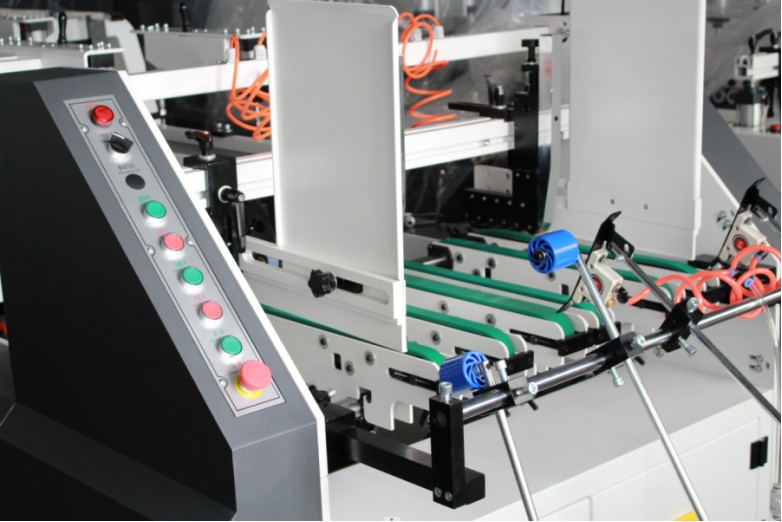
Variations in paperboard thickness, or caliper, directly impact the feeding mechanisms of automated lines. If the board is too thick, it will jam in the feed gates. If it is too thin, it may double-feed or buckle under the pressure of the erecting mandrels. Consistent caliper is non-negotiable for high-speed operations. We frequently trace line stoppages back to a supplier switching board mills, resulting in a microscopic caliper shift that throws off the entire feed timing.
You must match board grade specifications with the operational limits of your machinery. Consult the equipment manual to determine the acceptable caliper range. Ensure your supplier guarantees caliper consistency across all production batches. Even a variance of a few thousandths of an inch can disrupt the timing of an Automatic Paper Box Machine, leading to costly downtime and damaged blanks.
Paper grain direction plays a critical role in folding precision and crease resistance. Board folds cleanly parallel to the grain but resists folding across the grain. Incorrect grain direction causes the box panels to bow, leading to misfeeds and jams. Specify the correct grain direction based on how the box feeds through your specific erecting equipment. If the primary fold runs perpendicular to the grain, the machine will struggle to break the score cleanly.
Pre-creasing quality and score-line depth are equally important. Shallow scores cause the board to crack or resist folding, while overly deep scores weaken the structural integrity of the box. Consistent die-cutting ensures that all flaps and tabs align perfectly during the automated erecting process. Poor die-cutting results in skewed boxes that crash the machine. Implement a strict incoming quality control check to measure score depth before loading blanks into the hopper.
Surface finishes alter the substrate's Coefficient of Friction (COF). Aqueous coatings, UV varnishes, matte/gloss laminations, and foil stamping change how the board slides against machine components and other boxes. A low COF causes boxes to slip out of alignment, while a high COF causes them to stick in the hopper. You must specify a target COF range for your supplier to maintain.
COF variance impacts vacuum-feed pickup cups and feeding belts. If a surface is too slick, vacuum cups cannot maintain a seal, resulting in missed feeds. High-gloss laminations often require specialized suction cups or adjustments to vacuum pressure. Furthermore, surface treatments interfere with adhesive bonding. Heavy UV coatings or laminations prevent hot-melt or cold-glue from penetrating the paper fibers. You must specify un-coated glue flaps or use specialized adhesives formulated for low-surface-tension substrates to prevent pop-opens on the line.
The cheapest box is often a myth that ignores operational realities. Poor-quality materials increase labor costs through manual interventions and cause excessive machine wear. A box that saves pennies on the unit price but causes hourly jams on your automated line ultimately costs more in lost production time. We see procurement teams chase unit cost reductions only to watch maintenance budgets explode due to machine crashes.
Calculate the cost of packaging defects to understand true expenses. Factor in the labor required for rework, the cost of scrapped materials, and the overhead absorbed during line stoppages. A slightly more expensive box with consistent quality often yields a lower overall expenditure by maximizing line efficiency and reducing waste. Track your machine uptime alongside your packaging material batches to identify correlations between board quality and line performance.
Box structural design impacts pallet utilization and warehouse density. Excessive headspace inside a box wastes pallet space and increases storage costs. Optimize the box dimensions to fit the product snugly, allowing more units per pallet. Efficient palletization reduces the number of trips required for internal material handling and maximizes trailer cube utilization.
Dimensional weight pricing means carriers charge based on volume, not just actual weight. Optimize dimensional weight by eliminating unnecessary empty space within the packaging. Use the thinnest board grade that still meets your product protection requirements. Right-sizing your packaging reduces outbound shipping costs without compromising safety. Conduct a drop test protocol to ensure your right-sized box still survives the distribution environment.
Virgin fibers offer superior strength and consistency compared to recycled content. In high-stress factory environments, virgin kraft liners provide better runnability and puncture resistance. However, recycled content is often more cost-effective and aligns with corporate sustainability initiatives. You must balance performance metrics with environmental goals. Test recycled boards extensively on your lines, as they tend to have higher caliper variance and generate more dust.
Right-sizing packaging minimizes material waste and supports ESG objectives. By engineering the box to use the exact amount of material required, you reduce your carbon footprint and lower procurement costs. Sustainable practices often yield long-term financial benefits through reduced freight and material consumption. Work with suppliers who source from certified sustainably managed forests to ensure compliance with retail mandates.
Verifying a supplier's testing certifications is crucial for consistent performance. The Edge Crush Test (ECT) measures the board's top-to-bottom compression strength, indicating how well boxes will stack. The Mullen Burst Test measures the force required to rupture the board, indicating puncture resistance. Request these certifications for every board grade you purchase to ensure they meet your internal specifications.
Audit the manufacturer's Box Compression Test (BCT) data to ensure safe warehouse stacking. BCT evaluates the performance of the fully formed box, accounting for structural design and internal inserts. Reliable BCT data prevents catastrophic pallet collapses in your warehouse. Do not accept theoretical BCT calculations; demand physical test results from their lab.
Screen suppliers for advanced production capabilities. Advanced CAD/CAM sample makers ensure accurate prototyping. High-precision rotary die-cutters guarantee consistent flap dimensions and score depths. Modern folder-gluers ensure precise glue application and square folding. If a supplier uses outdated equipment, their dimensional variance will wreak havoc on your automated lines.
The supplier's in-house equipment tolerances must match or exceed the precision required by your automated factory lines. If their die-cutter has a wider tolerance than your erecting machine can handle, you will experience constant jams. Request equipment lists and tolerance specifications during the vetting process. Conduct a site visit to observe their maintenance practices and quality control checkpoints.
Select a vendor with multi-facility manufacturing capabilities to mitigate supply chain disruptions. If one facility goes offline due to equipment failure or natural disaster, they can shift production to another location. Relying on a single-facility supplier exposes your factory to significant risk, especially during peak production seasons.
Assess the supplier's ability to scale production rapidly. Seasonal peaks or unexpected volume surges require a supplier with excess capacity and flexible scheduling. Verify their raw material inventory levels and lead times for emergency orders. A strong supplier acts as an extension of your own manufacturing floor, adapting to your shifting schedules.
Request CAD samples and conduct physical transit trials before mass production. Do not approve a design based solely on a digital rendering. Run the physical prototypes through your automated lines to verify runnability and test them in real-world shipping conditions. This step catches design flaws before you commit to a massive production run.
Understand the timelines associated with custom cutting dies and print plates. Complex designs require specific tooling and longer setup times. Factor these initial investments into your overall project timeline. Ensure the supplier maintains backup dies for your high-volume SKUs to prevent delays if a die is damaged during their production run.
Request detailed material specification sheets from your current suppliers to verify caliper and grain direction.
Order unprinted CAD prototypes for your next product launch to test structural integrity.
Schedule a physical trial run of new box designs on your factory equipment to verify high-speed runnability.
Audit your primary packaging supplier's facility to confirm their die-cutting tolerances match your machine requirements.
A: Solid Bleached Sulfate (SBS) or high-quality Kraft are ideal. They offer consistent caliper, clean-cutting edges, and precise score lines, which are essential to ensure high-speed runnability and prevent feed jams.
A: Differentiate based on application. Use corrugated for secondary packaging, heavy items, or transit protection. Use paperboard for primary packaging, lightweight items, and high-end retail display requirements.
A: The Edge Crush Test (ECT) measures the board's top-to-bottom stacking strength. The Mullen Burst Test measures the force required to rupture the board, indicating its puncture resistance during handling.
A: SBS is premium virgin fiber for high-end print. CUK is strong unbleached kraft for heavy items. CCNB is a cost-effective recycled board featuring a clay-coated printing surface.
A: High-gloss or laminated finishes can cause sticking or slippage in vacuum cups. This requires adjustments to the machine's vacuum pressure or the use of specialized low-COF coatings to ensure reliable feeding.
A: Common culprits include incorrect grain direction, inconsistent board thickness, or poor pre-creasing and die-cutting from the manufacturer, which prevent the box from erecting squarely.


