Views: 0 Author: Site Editor Publish Time: 2025-11-14 Origin: Site
Die cutting is a specialized manufacturing process that allows businesses to cut, shape, or emboss various materials with high precision using a die. This technique is widely used across multiple industries, including packaging, printing, and textiles, to create products that are not only functional but also visually appealing. From custom packaging boxes and labels to intricate promotional materials, die cutting ensures consistent shapes and high-quality finishes.
Understanding the cost of die cutting is essential for manufacturers and business owners. Accurate knowledge of expenses helps in budgeting production effectively, selecting the right type of die cutting machine, and planning for materials, labor, and potential maintenance. By evaluating die cut costs, companies can make informed decisions that balance quality, efficiency, and profitability in their production processes.
When estimating die cutting costs, several factors play a critical role in determining the overall expense. Understanding these factors helps businesses make informed decisions and select the most suitable equipment for their production needs.
The type of die cutting machine directly affects both upfront investment and operational costs. Different machines offer varying levels of automation, speed, and production capacity:
Manual Die Cutting Machines
Manual machines are generally the most affordable option, making them ideal for small-scale or low-volume operations. Operators feed materials and perform cutting by hand, which allows for precise control but may require more time and labor.
Semi-Automatic Die Cutting Machines
Semi-automatic machines combine manual operation with some automated functions, such as motorized feeding or partial material handling. These machines improve efficiency, reduce operator fatigue, and are suitable for medium-volume production where a balance between cost and productivity is needed.
Fully Automatic Die Cutting Machines
Fully automatic machines are designed for high-speed, high-volume production. They feature advanced automation, including automatic feeding, cutting, stacking, and collection. While the initial investment is higher, these machines significantly reduce labor costs, increase throughput, and ensure consistent quality for large-scale operations.
Selecting the right type of die cutting machine based on production volume, budget, and required precision is key to optimizing both efficiency and cost-effectiveness in manufacturing.
The type of material being processed has a significant impact on die cutting costs. Different materials require varying levels of precision, machine settings, and tooling, which can influence both production efficiency and expenses:
Paper and Cardboard
Paper and cardboard are among the most cost-effective materials to die cut. They are easy to handle, compatible with most die cutting machines, and require standard cutting dies. These materials are ideal for packaging, labels, brochures, and other common printing applications. Their relatively low resistance to cutting reduces wear on tools and keeps operational costs minimal.
Plastics and Metals
Cutting plastics, metals, or other specialty materials often requires specialized dies, higher machine power, and more precise settings. For example, thicker plastics or thin metal sheets may necessitate rotary or hydraulic die cutting machines to achieve clean, consistent results. The added complexity increases both tooling costs and machine operation expenses, which should be considered when budgeting for production.
By understanding how different materials affect die cutting, manufacturers can better estimate costs and choose the appropriate machine and die type for efficient, high-quality production.
The complexity of the design being die cut is another key factor influencing costs. More intricate shapes require higher precision, specialized dies, and often longer setup times:
Simple Shapes
Basic geometric shapes such as squares, circles, or rectangles are straightforward to cut and generally incur lower die costs. These designs require standard dies, minimal setup, and less machine adjustment, making them ideal for high-volume, cost-sensitive production.
Intricate Designs
Complex patterns, detailed logos, or custom shapes demand precision-engineered dies and careful calibration of the die cutting machine. These factors increase production time, tooling costs, and overall expenses. High-precision dies also experience greater wear, which may necessitate more frequent maintenance or replacement.
Understanding the relationship between design complexity and die cutting cost helps manufacturers balance creativity and budget while ensuring efficient, high-quality production.
The volume of production significantly affects the overall cost per die-cut unit. Economies of scale play a crucial role in determining whether a project is cost-efficient:
Low Volume Production
Small batch or limited-run projects tend to have a higher per-unit cost. This is because setup costs, die fabrication, and machine calibration are spread across fewer units, making each piece more expensive. Low-volume runs are common for prototypes, custom packaging, or specialty items where flexibility and customization are prioritized over cost efficiency.
High Volume Production
Large-scale production benefits from lower per-unit costs. Setup and die expenses are amortized across a higher number of units, significantly reducing the cost of each piece. Fully automatic or high-speed die cutting machines are typically employed for these projects, maximizing efficiency and throughput while maintaining consistent quality.
By considering production volume, manufacturers can strategically plan die cutting projects to optimize costs while meeting production deadlines and quality standards.
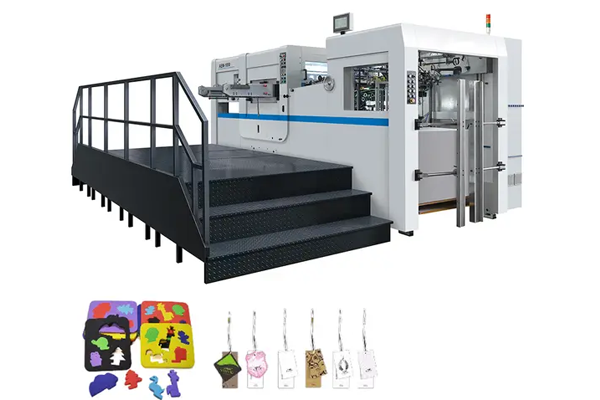
Understanding the typical cost ranges of die cutting machines helps businesses budget effectively and choose the right equipment for their production needs. Costs can vary based on machine type, features, and supplier:
Manual Die Cutting Machines
Manual machines are the most affordable option, typically ranging from $100 to $500. They are suitable for small-scale operations, limited production runs, or hobbyist applications, offering precise cutting without complex automation.
Semi-Automatic Die Cutting Machines
Semi-automatic machines combine manual and automated functions, offering higher efficiency and flexibility. Prices generally range from $500 to $5,000, depending on the level of automation, production speed, and additional features such as motorized feeding or stacking.
Fully Automatic Die Cutting Machines
Fully automatic machines are designed for high-speed, large-volume production with advanced automation for feeding, cutting, and collecting finished products. Costs can range from $5,000 to over $50,000, depending on machine capabilities, precision, size, and brand reputation.
Note: Actual prices may vary based on manufacturer, optional features, and specific production requirements. Businesses should consult suppliers like Koten Machinery to obtain customized quotes and select machines tailored to their production needs.
When calculating the total expense of die cutting, businesses should account for several additional factors beyond the base machine price:
Die Costs
Custom dies are required for cutting specific shapes and designs. Simple dies may cost around $50, while highly intricate or large dies can range into several thousand dollars, depending on material and precision requirements.
Maintenance and Repairs
Regular maintenance ensures consistent performance, reduces downtime, and extends the lifespan of the die cutting machine. Repair costs can vary depending on the machine type and frequency of use.
Training
Operator training may be necessary, particularly for semi-automatic and fully automatic machines. Proper training ensures efficient operation, safety, and maximizes machine productivity.
Estimating the cost of die cutting involves more than just the machine price. Key factors include the type of die cutting machine, material used, design complexity, production volume, and additional costs such as custom dies, maintenance, and operator training. By carefully assessing these aspects, manufacturers can plan budgets more effectively, enhance production efficiency, and ensure consistent, high-quality output.
For businesses aiming to optimize operations and achieve precise, reliable results, consulting with experienced suppliers like Koten Machinery is highly recommended. Their wide range of die cutting machines, from manual to fully automated solutions, can be tailored to meet diverse production needs, helping companies maximize productivity while controlling costs and maintaining superior product quality.


