
Views: 0 Author: Site Editor Publish Time: 2026-07-19 Origin: Site
Rising raw material costs, stricter sustainability mandates, and the demand for higher throughput force manufacturers to audit their packaging lines. A mismatch between packaging materials, end-use requirements, and production equipment leads to compromised automated fill rates, increased waste, and margin erosion. When packaging structural integrity fails to align with the machinery handling it, the entire production workflow suffers from bottlenecks and excessive downtime. We will evaluate Paper Box Solutions, determine the right material architecture for specific applications, and assess the viability of integrating a Paper Box Making Machine to optimize production workflows, reduce freight dependencies, and meet stringent compliance standards.
Application-Driven Architecture: Selecting between corrugated, rigid, and folding carton formats must be dictated by specific end-use requirements (e.g., load-bearing shipping vs. FDA-compliant food packaging).
Equipment Integration: The decision to implement an in-house paper box making machine hinges on evaluating footprint constraints, changeover agility, and long-term maintenance overhead.
ROI and Trade-offs: True operational value requires balancing upfront capital expenditure (CapEx) against long-term operational savings (OpEx), factoring in potential throughput bottlenecks.
Risk Mitigation: Successful adoption demands proactive strategies for managing material supply variability, operator training, and planned machine downtime.
Standardized packaging formats drastically reduce jamming in automated case erectors and packers. When blanks are cut and scored with high precision, automated equipment folds and seals them without hesitation. Dimensional variance in poorly manufactured boxes causes misfeeds. Operators must then halt the line and clear jams manually. Upgrading to precise packaging formats ensures automated machinery operates at peak efficiency.
Production managers must establish clear metrics to evaluate fill rate improvements. Track units per minute before and after the packaging upgrade. Monitor the reduction in machine faults. Track drop-test survival rates to ensure the new packaging maintains structural integrity during high-speed automated packing. You need baseline data to prove the upgrade actually improved line efficiency.
Lightweighting packaging materials reduces material volume, but you must balance this against necessary edge-crush test (ECT) or Mullen burst strength scores. Removing too much material compromises the box's ability to withstand stacking pressure during transit. You must analyze the exact load-bearing requirements of your products to find the optimal board grade.
Under-specified packaging carries significant hidden costs. The initial unit cost of the box might look lower on paper. However, resulting product damage, freight claims, and customer returns quickly erase those savings. A robust packaging solution protects the product throughout the supply chain. This ensures the final delivered cost remains profitable.
| Test Type | Measurement Focus | Primary Application | Industry Standard Metric |
|---|---|---|---|
| Edge Crush Test (ECT) | Stacking strength and vertical compression | Palletized shipping and warehousing | Pounds per inch (e.g., 32 ECT) |
| Mullen Burst Test | Puncture resistance and rough handling | Individual parcel shipping (e.g., UPS/FedEx) | Pounds per square inch (e.g., 200# Burst) |
Paper-based packaging serves as a primary response to global plastic reduction initiatives and extended producer responsibility (EPR) regulations. Consumer brands face intense pressure to eliminate single-use plastics. Transitioning to paperboard and corrugated alternatives provides a viable, recyclable path forward. This shift requires careful material selection to ensure performance parity with legacy plastic solutions.
Verifiable sustainability relies on recognized certifications. Look for materials carrying FSC (Forest Stewardship Council), SFI (Sustainable Forestry Initiative), or PEFC (Programme for the Endorsement of Forest Certification) labels. These standards confirm the paper fibers originate from responsibly managed forests and meet established recyclability criteria.
Corrugated boards rely on their structural layers for strength. Single-wall boards offer standard protection. Double-wall and triple-wall configurations provide exponential increases in stacking strength and puncture resistance. Your choice depends entirely on the payload weight and the rigors of the distribution environment.
Primary industrial use cases include transit packaging, heavy consumer goods, protective shipping cartons, and high-strength retail-ready product displays. Structural flute profiles directly impact compression strength and printability.
A-Flute: Excellent cushioning and stacking strength. Used for fragile items.
B-Flute: Good puncture resistance and flat crush strength. Common in die-cut boxes.
C-Flute: The industry standard for shipping boxes. Balances stacking strength and printability.
E-Flute: Thin profile with a smooth surface. Ideal for high-quality retail graphics and display trays.
F-Flute: Micro-flute used for specialty retail packaging and fast-food clamshells.
Folding cartons utilize single-layer paperboard designed for high print fidelity and precise folding. Solid Bleached Sulfate (SBS) provides a premium white surface ideal for medical and cosmetic packaging. Coated Unbleached Kraft (CUK) offers superior tear resistance for beverage carriers. Coated Recycled Board (CRB) provides an eco-friendly option for dry foods and lightweight retail items.
These materials dominate applications requiring lightweight retail packaging, pharmaceuticals, medical devices, and cosmetics. High-fidelity graphics and precise tuck-closures drive brand presentation and consumer safety. The paperboard must accept complex die-cuts and intricate folding patterns without cracking at the score lines.
Rigid boxes feature a three-dimensional construction utilizing thick, non-collapsible chipboard wrapped in specialty laminated paper. This architecture provides exceptional structural rigidity and a premium tactile feel. It remains the standard for luxury goods, high-end electronics, and premium retail packaging.
The core trade-off with rigid boxes involves balancing high perceived product value against a complete lack of collapsibility. Because these boxes cannot ship flat, they massively impact warehousing space and inbound shipping costs. You must weigh the premium unboxing experience against the logistical burden of transporting and storing empty volume.
Paper and paperboard used in direct and indirect food contact face strict regulatory requirements. Compliance with FDA Title 21 CFR dictates that materials must not transfer harmful substances to the food. Migration testing is mandatory. You must ensure inks, adhesives, and base fibers remain stable under various temperature and moisture conditions.
Specific applications include fast food containers, microwave popcorn bags, baking paper, milk cartons, and ice-cream cups. To manage grease and moisture, manufacturers integrate aqueous coatings, PLA linings, or traditional poly-linings. Selecting the right barrier maintains functionality while navigating local recyclability claims.
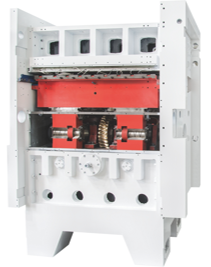
Deciding whether to bring box forming and gluing in-house requires a strict break-even analysis. Compare the costs of operating converting equipment against relying on pre-glued or knocked-down blanks from external commercial converters. High-volume operations often find that in-house converting reduces per-unit costs and shortens lead times.
Evaluate the freight-cost implications of shipping empty, pre-formed boxes versus shipping flat sheets or rolls. Transporting flat materials maximizes trailer cube utilization. This significantly lowers inbound freight expenses. In-house converting transforms these dense, flat materials into finished boxes precisely when the production line needs them.
The technical converting stages map the journey from raw material to finished box. Each stage must operate in perfect synchronization to maintain high throughput.
Feeding: Automated suction feeders pull corrugated sheets or paperboard blanks into the machine alignment section.
Printing: Flexographic or digital inline printing stations apply graphics, barcodes, and compliance markings.
Scoring and Creasing: Rotary scoring wheels create precise fold lines without tearing the paper fibers.
Slotting and Die-Cutting: Cutting dies remove excess material to form flaps, tabs, and custom architectural features.
Folding: High-speed belts and folding rails fold the blank along the pre-scored lines.
Gluing: Extrusion nozzles apply cold PVA or hot-melt adhesive to the glue tabs.
Compression: The folded and glued box passes through a compression section to ensure the adhesive sets properly before stacking.
Servo-driven motors and computerized control systems ensure precise print-to-cut registration and minimize web or sheet waste. Advanced controls allow operators to make micro-adjustments on the fly. This keeps the converting process within tight dimensional tolerances.
Semi-automatic box makers require lower initial capital but rely heavily on manual labor for feeding and offloading. Fully automated, continuous-motion high-speed converting systems demand higher initial investment but deliver massive throughput with minimal operator intervention. Your choice depends on production volume and labor availability.
Evaluate integration capabilities with upstream manufacturing execution systems (MES) and downstream automated palletizing systems. A fully integrated line allows for seamless data flow. The packaging equipment can adjust speeds based on upstream production rates and downstream palletizing capacity.
Assess how quickly the machinery switches between different board grades, liner weights, and caliper thicknesses. Production lines handling multiple SKUs require equipment that adapts rapidly to varying material specifications without extensive manual recalibration.
Toolless, automated changeovers directly increase Overall Equipment Effectiveness (OEE). Motorized slotter and blade adjustments eliminate the need for operators to manually unbolt and move tooling. In high-mix, low-volume production environments, reducing changeover time from hours to minutes keeps the line profitable.
Physical constraints dictate equipment selection. Detail the floor space footprints for the main line, roll-stands, and ancillary material handling equipment. Ensure adequate clearance for forklift access and operator movement around the machinery.
Analyze utility requirements carefully. High-speed converting lines demand high-voltage power, clean compressed air for pneumatic actuators, and proper ventilation for adhesive delivery systems. Evaluate integration protocols like OPC UA or PackML for connecting the machinery to existing SCADA, industrial IoT (IIoT), or ERP systems. Centralized data monitoring prevents isolated equipment silos.
Inline vision inspection systems detect adhesive misapplication, folding misalignments, or print registration errors before the units reach downstream packing. Catching defects early prevents jammed case packers and ensures only quality packaging reaches the consumer.
Analyze automatic rejection mechanisms and integrated scrap removal systems. When the vision system detects a flaw, the equipment must eject the defective blank without stopping the line. Efficient scrap removal keeps the work area clean and prevents offcuts from interfering with moving parts.
Model the financial impact over a 5-to-7-year lifecycle. Factor in machine depreciation, utility bills, consumable glue and ink costs, and replacement wear-parts like dies, belts, and blades. A cheaper machine upfront often incurs massive maintenance and consumable costs over time. You must evaluate the long-term operational expenditure to understand the true financial commitment.
The highest-speed rotary die-cutters often struggle with highly complex, multi-panel custom box architectures. You must prioritize throughput speed for standardized shipping containers versus flexibility for bespoke retail display packaging. High-speed lines excel at simple RSC (Regular Slotted Carton) designs. Intricate die-cuts usually require slower, specialized flatbed equipment.
Avoid equipment that locks the operation into expensive, proprietary tooling for size modifications. Advocate for open-market, standard-sized cutting dies and tooling plates. Standardized tooling reduces replacement costs and ensures faster procurement when you introduce new box designs.
Warped liners, humidity-induced board degradation, or out-of-spec paperboard cause severe machine jams and excessive scrap. Material variability destroys high-speed automated converting efficiency.
Establish strict incoming quality control (IQC) metrics. Test for moisture content upon receipt. Invest in climate-controlled warehousing for paper rolls and blanks. Maintaining stable humidity levels prevents board warp and ensures consistent machine feeding.
Dust accumulation, adhesive buildup, and rapid wear on high-speed folding belts, cutting dies, and glue nozzles are unavoidable realities in paper converting. Neglecting these issues leads to catastrophic machine failure.
Implement preventive and predictive maintenance schedules. Install effective dust extraction hoods to keep optical sensors clean. Maintain a critical, on-site spare parts inventory to minimize downtime when wear parts inevitably fail.
Operator error during manual settings changes often leads to extensive downtime or scrap production. Improperly calibrated folding rails or glue guns ruin entire batches of blanks.
Mandate OEM-led certification programs and design clear digital standard operating procedures (SOPs). Enforce strict adherence to machine guarding, light curtains, and lockout/tagout (LOTO) procedures. Operator safety during maintenance and changeovers is non-negotiable.
Categorize your packaging requirements by annual volume, required load-bearing capacity, and footprint limits before issuing RFPs to equipment vendors.
Conduct a comprehensive site assessment to verify utility capacities, floor space, and material handling workflows.
Perform trial runs using actual product payloads on candidate machinery to validate throughput and structural integrity.
Complete a full-scale lifecycle financial model comparing in-house converting OpEx against outsourced procurement costs.
A: Primary applications include heavy-duty corrugated shipping and logistics containers, retail-ready product displays, consumer folding cartons for cosmetics and pharmaceuticals, premium rigid packaging for luxury goods, and FDA-compliant food-safe containers.
A: Precise, in-house converting reduces dimensional variance in the box blanks. Consistent dimensions prevent misfeeds and jams in downstream automated case erectors and packers, keeping the production line running continuously.
A: Corrugated board features a multi-layer, fluted structure designed for heavy shipping loads and impact resistance. Folding cartons use single-layer, high-printability clay-coated paperboard intended for lightweight retail packaging and high-fidelity graphics.
A: Calculate raw material cost savings and the elimination of empty-box freight and storage. Compare these savings against the machine's CapEx, physical floor footprint requirements, ongoing maintenance labor, and utility costs.
A: Food packaging must meet FDA regulations for direct food contact, including strict heavy metal migration limits. It often requires the utilization of biodegradable, aqueous, or polymer barrier coatings to manage grease and moisture safely.
A: The most frequent causes of downtime are adhesive clogging in the extrusion nozzles, paper dust buildup on optical sensors, out-of-spec or warped paperboard sheets jamming the feeder, and improper manual adjustments during size changeovers.


