Views: 0 Author: Site Editor Publish Time: 2025-11-10 Origin: Site
Die cutting is an essential process in modern printing, packaging, and manufacturing industries. It involves cutting materials into precise shapes and designs using specialized machines, allowing businesses to create products with consistent quality and professional finishes. Whether it’s producing packaging boxes, labels, decorative items, or custom promotional materials, die cutting ensures each piece meets exact specifications.
The process not only enhances efficiency by streamlining repetitive cutting tasks but also improves accuracy, reducing material waste and minimizing errors that can occur with manual cutting. Consistency is another major advantage, as every cut maintains uniformity across large production runs, which is critical for branding, product presentation, and customer satisfaction.
This raises an important question: “What exactly does a die cutting machine do?” Understanding the functions and capabilities of these machines helps manufacturers choose the right equipment for their production needs, ensuring optimal efficiency, precision, and quality in their operations.
Die cutting machines play a critical role in modern printing, packaging, and manufacturing industries. By combining multiple functions into a single machine, they help businesses achieve higher efficiency, consistent quality, and professional finishes. These machines are versatile, capable of handling a wide range of materials and product designs, making them indispensable for both small-scale and large-scale production.
One of the core functions of a die cutting machine is precise cutting. These machines are capable of cutting a wide range of materials—such as paper, cardboard, labels, foil, and other specialty substrates—into exact shapes and sizes with high accuracy. Precise cutting ensures that every product, whether it’s a packaging box, promotional item, or custom label, maintains uniformity and meets strict design specifications.
Modern die cutting machines can handle complex patterns and intricate designs that would be difficult or impossible to achieve manually. This precision reduces material waste, minimizes errors, and improves overall production efficiency. For businesses in printing, packaging, and manufacturing, precise cutting not only enhances product quality but also supports high-volume production while maintaining consistency across large batches.
Another essential function of a die cutting machine is creasing and scoring. This process prepares precise fold lines on materials such as cardboard, paperboard, or laminated sheets, making it easier to fold products without cracking or damaging the surface. Creasing is particularly important for packaging boxes, brochures, cartons, and other folded products where clean, professional folds are critical for both appearance and functionality.
Die cutting machines with integrated creasing and scoring capabilities allow manufacturers to combine cutting and folding preparation in a single step, reducing production time and labor costs. This ensures that each fold is consistent across large production runs, maintaining high-quality standards and enhancing the finished product’s durability and visual appeal.
By using creasing and scoring, businesses can achieve efficient production workflows, minimize material waste, and deliver packaging or printed products that meet precise design specifications. It is an indispensable feature for manufacturers focused on quality, efficiency, and professional presentation.
Embossing and debossing are important functions of die cutting machines that add raised or recessed designs to materials, enhancing both aesthetics and brand identity. Embossing raises patterns or logos above the surface, giving products a three-dimensional tactile effect, while debossing presses designs into the material, creating subtle recessed impressions.
These techniques are widely used in packaging, book covers, labels, greeting cards, and promotional materials. By incorporating embossing or debossing, products gain a premium look and feel, which improves visual appeal and strengthens brand recognition.
Modern die cutting machines can combine embossing and debossing with other processes such as cutting, creasing, and perforating. This integration allows manufacturers to achieve high precision and consistency while reducing production steps, saving time, and minimizing material waste.
Using embossing and debossing not only elevates product quality but also creates a professional, eye-catching finish that helps products stand out in competitive markets. For businesses looking to enhance packaging or printed materials, these functions are essential for producing visually compelling and high-quality products.
Perforating is a vital function of die cutting machines that creates tear lines or easy-to-open sections on various materials. This feature is commonly used in packaging, tickets, coupons, labels, and promotional products, where controlled tearing is required.
By precisely cutting small holes or slits along designated lines, perforation ensures that products can be opened or separated cleanly and efficiently, improving user experience. It also maintains the structural integrity of the remaining material, preventing accidental tearing or damage.
Modern die cutting machines integrate perforating with other processes such as cutting, creasing, and embossing, allowing manufacturers to streamline production and maintain consistent quality across large batches. Automated perforation reduces labor requirements, enhances speed, and minimizes errors, making it an essential feature for high-volume and precision production.
Perforating not only adds functionality but also contributes to the overall aesthetic and usability of packaging and printed products. For businesses focused on delivering professional, user-friendly, and efficient products, perforation is an indispensable part of the die cutting process.
Material handling is a critical aspect of modern die cutting machines, designed to automate the feeding, stacking, and collection of finished sheets. Efficient material handling ensures a smooth production workflow, reduces manual labor, and increases overall productivity.
Automated feeding systems allow raw materials such as paper, cardboard, or specialty substrates to be continuously supplied to the machine, minimizing downtime and maintaining consistent production speed. After the cutting process, automated stacking or collection systems organize the finished products, preventing damage and ensuring easy packaging or further processing.
Advanced die cutting machines can integrate material handling with other functions such as precise cutting, creasing, embossing, or perforating, creating a fully streamlined production line. This reduces human intervention, lowers the risk of errors, and enhances operational efficiency, especially in high-volume manufacturing environments.
By optimizing material handling, businesses can improve production efficiency, maintain consistent product quality, and save on labor costs. For manufacturers seeking to maximize output while ensuring precision and reliability, automated material handling is an indispensable feature of modern die cutting solutions.
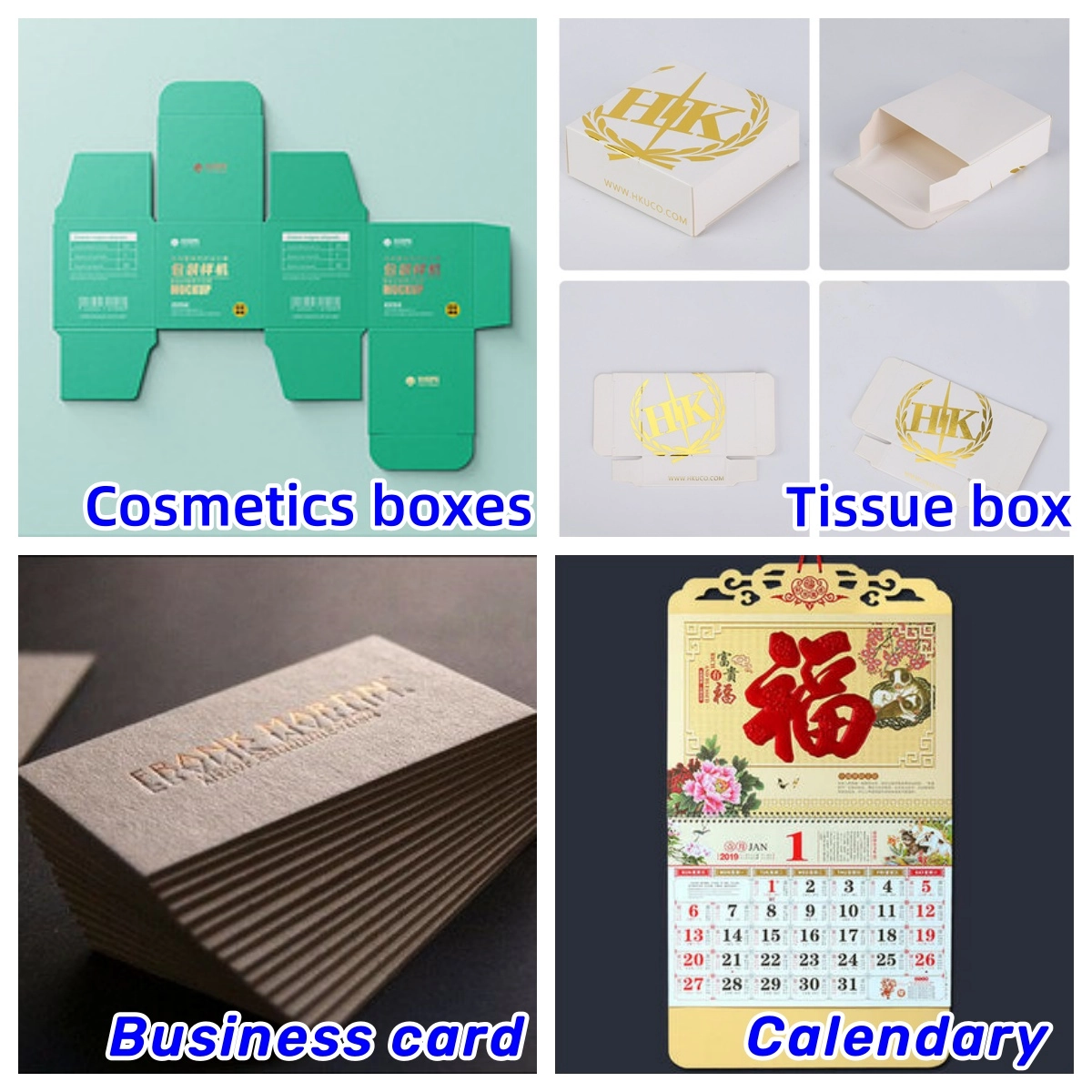
Die cutting machines are highly versatile and can process a wide variety of materials, making them suitable for diverse applications in printing, packaging, and manufacturing. Common materials include:
Paper: Standard paper is widely used for brochures, flyers, labels, and packaging inserts. Most die cutting machines can handle paper with ease, providing precise shapes and designs.
Cardboard and Gray Board: Thicker substrates like cardboard and gray board are commonly used for packaging boxes, book covers, and premium product packaging. Machines with high cutting force or flatbed designs are ideal for these materials.
Labels and Adhesive Films: Die cutting machines can efficiently cut adhesive-backed materials for stickers, decals, or promotional labels. Specialized settings may be needed to prevent material stretching or adhesive residue.
Leather and Thin Plastics: For luxury packaging, craft items, or specialty products, machines can cut leather and thin plastics with precision, often requiring adjustable pressure and cutting speed.
Different materials often require different machine types or settings. For example:
Thin papers may need minimal cutting pressure and high-speed operation.
Thick boards or multi-layered materials benefit from flatbed or hydraulic die cutting machines for consistent results.
Adhesive films or delicate substrates may require slower speeds and precise alignment to avoid tearing or miscuts.
By understanding the material requirements, manufacturers can choose the most suitable die cutting machine and settings, ensuring high-quality output, reduced waste, and efficient production.
Die cutting machines offer numerous advantages that make them indispensable in modern printing, packaging, and manufacturing processes. By automating and integrating multiple functions, these machines help businesses achieve higher efficiency, precision, and cost-effectiveness.
One of the most significant benefits of die cutting machines is the ability to increase production speed while maintaining consistent quality. Automated cutting ensures that each product meets exact design specifications, whether it’s a simple shape or a complex pattern. Consistency is critical for brand packaging, labels, and bulk orders, reducing errors that can occur with manual cutting.
Die cutting machines minimize manual labor requirements by automating feeding, cutting, creasing, embossing, and stacking processes. This not only saves labor costs but also reduces material waste, as precise cuts and controlled perforations prevent errors and misaligned products. Efficient material usage also supports sustainable production practices.
Modern die cutting machines are capable of producing highly precise cuts, even for intricate designs or custom shapes. Whether creating luxury packaging, detailed labels, or specialty products, these machines ensure accurate results with clean edges and consistent dimensions. Precision cutting is essential for maintaining professional appearance and product quality.
Die cutting machines are versatile, suitable for both small-batch custom production and high-volume manufacturing. From one-off promotional items to mass-produced packaging, manufacturers can adjust machine settings to match production scale, material type, and product complexity. This flexibility helps businesses meet diverse customer demands without compromising efficiency or quality.
Die cutting machines are essential tools in modern printing, packaging, and manufacturing, offering key functions such as precise cutting, creasing, embossing, debossing, perforating, and efficient material handling. These capabilities enable manufacturers to produce high-quality, visually appealing, and consistent products while minimizing labor and material waste.
Choosing the right die cutting machine for specific materials and production requirements ensures improved efficiency, accuracy, and versatility across both small-batch and large-scale operations. Businesses can streamline workflows, maintain precision in complex designs, and enhance overall product quality.
For manufacturers seeking reliable, high-performance die cutting solutions, exploring the advanced machines and comprehensive product range offered by Koten Machinery can provide practical options tailored to diverse production needs. Contacting their team can help identify the ideal solution to boost productivity, reduce costs, and achieve professional, consistent results.


